Thursday, August 9, 2012

Battle of Cedar Mountain 150th Anniversary


On 9 August 1862, the relative quiet of the American Civil War in Virginia was broken with the fight at Cedar Mountain, in Culpeper County, Virginia.


Confederate General Thomas "Stonewall" Jackson (Left) and Union General Nathaniel P. Banks (Right)

The Union had cobbled the remnants of the three Departments/Armies that suffered defeat at the hands of CS Gen. Thomas "Stonewall" Jackson during the Spring 1862 Shenandoah Valley campaign into a single force, the Union Army of Virginia, under the command of the pompous US Gen. John Pope.  Pope had achieved a degree of success along the Mississippi earlier, and now came to Virginia with grand plans of crushing Robert E. Lee.  He also came determined to treat Virginian civilians loyal to their state as traitors, and imposed draconian measures against them.  Pope's Union Army of Virginia had in the vicinity of 50,000 men spread across Northern Virginia.

CS General Robert E. Lee, with his Confederate Army of Northern Virginia, had succeeded in knocking the fight out of US Gen. George McClellan and the Union Army of the Potomac a month before, and even now watched as McClellan's grand army slowly evacuated from Harrison's Landing on the James River back to Washington, DC.  The remaining army was to big to defeat, and without an adequate Naval force, there was little that could be done to stop the evacuation.  Pope's army, however, was of a size that Lee and his Army of Northern Virginia could perhaps contend with -- at least until the remainder of McClellan's army returned to that area.  So Lee would shift his forces north to deal with Pope, counting on McClellan and the Army of the Potomac having permanently given up the initiative.

So it was that Stonewall Jackson, commanding 22,000 men -- half of Lee's army -- crossed the Rapidan River into Culpeper County, hoping to deal a blow to a portion of Pope's army, the II Corps, US Army of Virginia, under US General Nathaniel Banks (who had been beaten by Jackson at Winchester that Spring), with his 12,000 men.
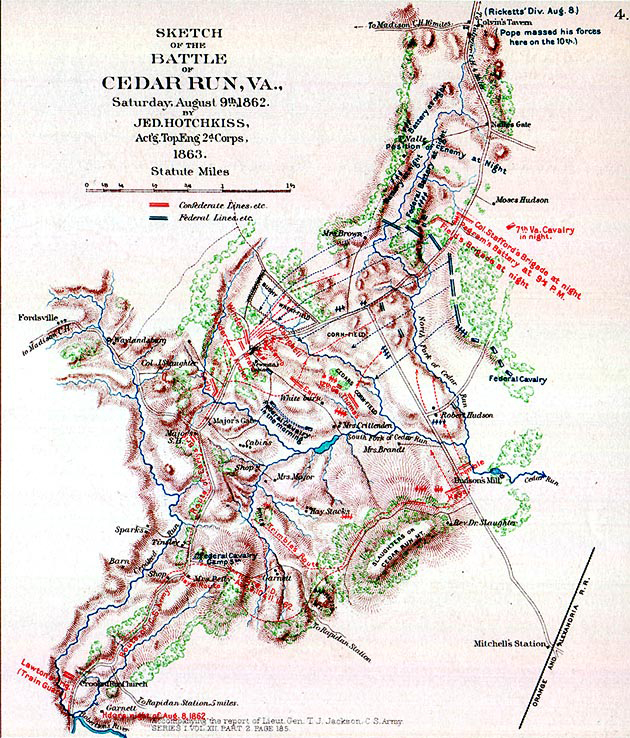
File:Sketch of the Battle of Cedar Run.jpg
A map of the action, entitled the Battle of Cedar Run, after an alternate name for the Battle of Cedar Mountain.


Despite some surprising temporary success for this outnumbered Union force, they mauled the division of CS Gen Charles Winder, mortally wounding him, in the end, the Confederates carried the day.  Stonewall Jackson actually rallied his men by waving his still-sheathed sword over his head as he also clutched a flag in his other hand.


Jackson at Cedar Mountain rallying his men!

The NPS account of the Battle can be found here: http://www.cr.nps.gov/hps/abpp/battles/va022.htm

If you wish to visit the ground of the battle, the sign at this link marks the center of action.  There is actually a short hiking trail and a few other orientation signs offered to the public at the site by the Civil War Preservation Trust: http://www.hmdb.org/Marker.asp?Marker=41662

Map of the Battle of Cedar Mountain Photo, Click for full size
Detail from the battle map on the Civil War Trails sign at the battlesite.


After this battle in which Jackson suffered 1,400 casualties to Banks' 2,500, Jackson withdrew back across the Rapidan to wait for the rest of the Army of Northern Virginia.  Soon a new offensive would begin that would take the army back into an old battleground.  At the end of the month they would be back along the banks of the Bull Run in Manassas...

Live well!

Wednesday, August 8, 2012

Tobacco & Virginia

Despite its much-maligned qualities, Tobacco (Nicotiana species), a member of the Nightshade family, Solanaceae, was, in many ways, the crop that enabled the colony of Virginia, in particular, to survive.

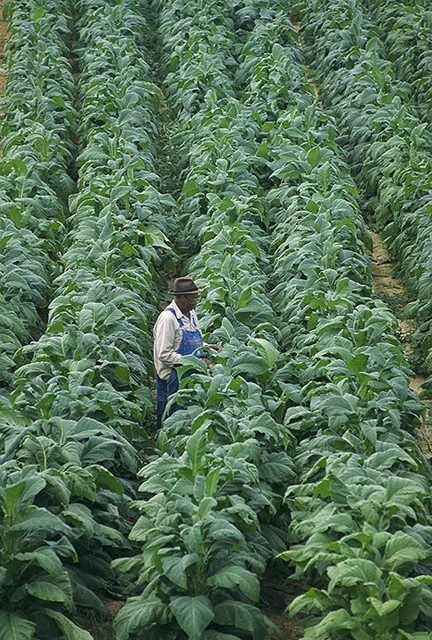
File:Tobacco.jpg
A field of cultivated Tobacco in Chatham, Pittsylvania County, Virginia.


We might note that several species of Tobacco are grown commercially, with two most notable -- Nicotiana tabacum is certainly the most common, and is typically what folks are referring to when they say Tobacco.  Interestingly, N. rustica, which was the originally cultivated species in Virginia, and much more potent in nicotine, is now popular in Asia.  This site has an interesting set of information on these species: http://artsci.wustl.edu/~gjfritz/Nicotiana_sp.html


File:TobaccoYield.png
This map shows the primary areas of Tobacco production worldwide.


Today, China, India, and Brazil all produce more Tobacco than the United States.  In the United States, North Carolina and Kentucky are now the leaders in production, while in Virginia, production is concentrated in the Southside of Virginia (the south-central area).  The Tidewater, formerly an area of production, has long sense moved away from its production.  Still, reminders of its former place there remain in such things as the seal of Prince William County, Virginia and the flag of nearby Calvert County, Maryland.


File:Seal = Prince William County Seal.jpg
The Seal of Prince William County, Virginia, with its prominent display of a Tobacco plant.


The flag of nearby Calvert County, Maryland, with a Tobacco leaf over the Calvert family crest.


Returning to the historical situation in colnial Virginia, Tobacco was the cash crop that finally gave a new colony of Virginia its economically viable reason for existing. Precious metals were not found here as they had been in Mexico and Peru, and Virginia was too far north for crops such as sugar.  So it was that Tobacco was struck upon as a cash crop that would grow, and would almost embody the economy of Virginia for several centuries.  It would continue to have an important role in the agriculture of Virginia for quite some time even after the Revolution.

In addition, the cultivation of Tobacco resulted in a unique and rural society in the Old Dominion.
"Thomas Jefferson noted in 1785 that, “[o]ur country being much intersected with navigable waters, and trade brought generally to our doors, instead of our being obliged to go in quest of it, has probably been one of the causes why we have no towns of any consequence.”[1] As Jefferson observed, part of the reason behind this aversion to all things urban was the tendency of the widely scattered planters to trade directly with England for her goods. These farmers traded directly with their mother country because, primarily, of the nature of the crop that they grew: tobacco. It was tobacco that Virginia grew above all else so that “[b]y the middle of the eighteenth century, many people both in the colonies and the mother country had come to regard Virginia and tobacco as synonymous.”[2] The Virginia farmer could to grow tobacco on a particular field for some three years before depleting the soil. He would then plant the field with corn for up to ten years, and he then “abandoned the field, allowing it to revert to pine forest.”[3] This was anything but the kind of farming known in England, for the farmer in the Old Dominion[4] rarely used the plough, never used manure, and would usually till the ground with hoes alone.[5] This reckless manner of cultivation demanded much land, for the tobacco farmer was always in need of fresh soil. This need of land was one major contributing factor to the scattered nature of Virginia’s citizens. The other was the tobacco driven economy. Tobacco was essentially the currency in the colony, for coins were rare in Virginia, and tobacco was used to pay for everything.  Even the royal governor of Virginia taxed in it.[6]  The majority of this cash crop would be shipped to England, and, in return, the goods desired would be shipped back over to the planters in the Old Dominion. The farmers themselves grew enough food to subsist, and so they gained all of their other wants by means of the tobacco shipped to England.  There was simply no reason to congregate in towns when there is no money, and no market for anything but tobacco to be sent to England.  Thus, Virginia was deprived not only of towns themselves, but the whole class of tradesmen that would normally be associated with the urban economy.  This was the economic and social arrangement that would remain dominant throughout Virginia’s years as a colony.

[1] Thomas Jefferson, Notes on the State of Virginia, ed. Frank Shuffelton (Paris: 1785; reprint, New York: Penguin Books, 1999), 114. Query XII.
[2] T.H. Breen, Tobacco Culture (Princeton, New Jersey: Princeton University Press, 1985), 57.
[3] William Hemphill et al., Cavalier Commonwealth (New York: McGraw Hill Book Company, Ltd., 1957), 49.
[4] King Charles II, following his restoration to the English throne in 1660, granted the title of “Old Dominion” to the colony of Virginia.  This name of endearment was given in gratitude for Virginia’s loyalty to the Stuarts during the English Civil War.
[5] Charles Campbell, History of the Colony and Ancient Dominion of Virginia (Philadelphia: J.B. Lippincott and Co., 1860), 349.
[6] Ibid., 350."


So it was Tobacco that prevented Virginia, the most populated of the original 13 states, from having any urban area larger than Williamsburg, which had a population not much more than 10,000.  The growth of cities of some larger size, such as Richmond or Norfolks, would have to be a later development.

Virginia, indeed, has a rich Tobacco Heritage!


Virginia's Tobacco Heritage License Plate

UPDATED: This article mentions a bit about Catholic Tobacco Heritage: http://www.catholicworldreport.com/Item/1762/in_the_habit_a_history_of_catholicism_and_tobacco.aspx

Live well!

Tuesday, August 7, 2012

Pundits, Thugs, Juggernauts, & a Bath

Today we take a mini trip to the massive nation of India to discuss five things: Pundits, Thugs, Juggernauts, IPA, and a Bath.

The first three are commonly used English terms that have an interesting history in India.

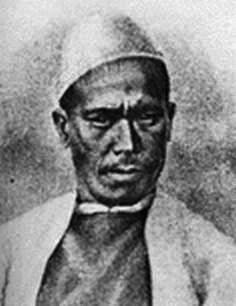
File:NainSingh.gif
The Pundit, Nain Singh (+1895AD).

Pundits, now thought of as political commentators, were originially late 19th century Indian surveyors that mapped much of central Asia on behalf of the British Empire.  These Pundits, a word derived from the Sanskrit word for scholar, were able to travel into areas closed to Europeans.  Disguised as Buddhist pilgrims, they mapped vast tracts, hiding compasses in prayer wheels, and using Buddhist rosaries to measure distances covered.  Between 1865 and 1885, these Survey of India trained Pundits gave the British a solid understanding of the region previously unknown.

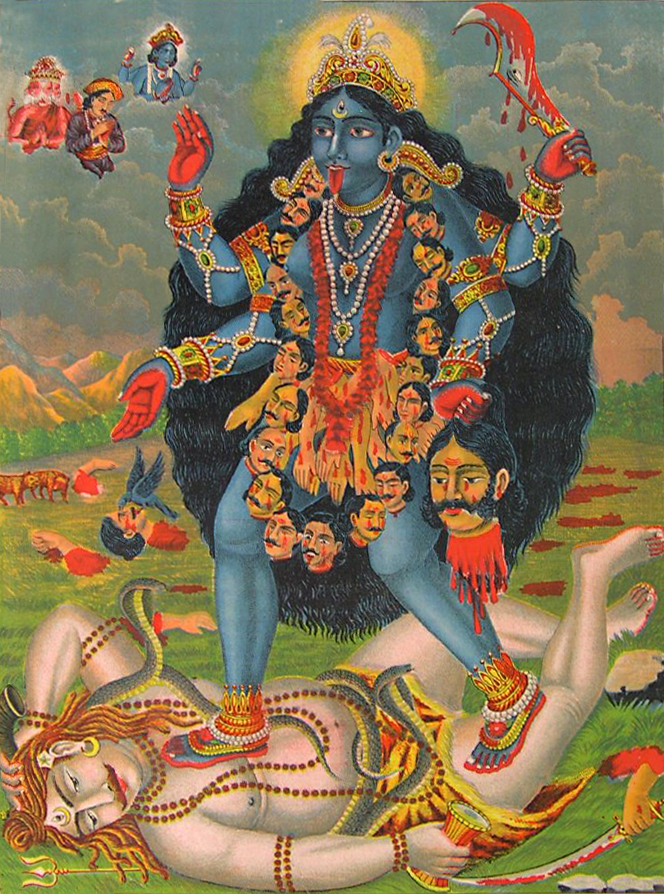
File:Kali lithograph.jpg
The goddess Kali, patroness of the Thugs.

Thugs, now thought of as bullies or criminals who rough up others, were originally an Indian sect of Hindus dedicated to the goddes Kali.  In the autumn, these Thugs would murder travellers, especially wealthy ones, as a sacrifice to the demonic Kali, often by strangling -- hence their other name of Phansigars, or stranglers.  This nasty practice was rooted out in India by the British.


File:Rath Yatra Puri 07-11027.jpg
The three chariots of the Rath Yatra procession in Puri, Orissa, India, with the Jagannath Temple to the right.


We know a juggernaut to be large and unstoppable, but few, perhaps, know the origin of the term.  In the Indian city of Puri, in the state of Orissa, is a temple of Jagannath (an incarnation of Vishnu/Krishna).  Each year, during the occassion of Rath Yatra, the idols of this temple are drawn in procession on a massive chariots.  It is from this, and the enormous chariots of Jagannath that we derive the word juggernaut!

File:Fuller's IPA.JPG
Some Fuller's India Pale Ale.

IPA, or India Pale Ale, is a popular style of beer brewed with a healthy portion of hops, which give the beer its unique bitterness.  This name comes from the fact that this manner of beer, in the 19th century, was referred to as a pale ale prepared for the India climate.  Here is a good summary of how this name came and stuck, and how it related to India:
"All we know from the evidence we do have is that Hodgson was one of the brewers exporting pale ale to India, and became the most famous. We can guess that Hodgson quite likely knew of the opinion expressed in books on brewing written in the 1760s that it was a good idea to highly hop ales for export to warmer climes. But there is no evidence at all that Hodgson was the one to discover this. Eventually that general knowledge about the need to hop beers for export to places like India apparently led to brewers to announce for sale something they called “Pale Ale prepared for the East and West India Climate” and similar designations, which was eventually shortened or summarised as “India Pale Ale”. The fact that Hodgson called its beer “East India Pale Ale” in 1835 means it was probably “prepared for the East India climate” and so more highly hopped: whether it was so prepared in 1793 we don’t know" [cf., http://zythophile.wordpress.com/2010/03/31/ipa-the-executive-summary/]

File:Varanasiganga.jpg
The Ganges River at Varanasi, Uttar Pradesh, India.

Finally, we have the Ganges River at the Indian city of Varanasi, in the state of Uttar Pradesh.  This is the most sacred spot on the Ganges for Hindus, and a bath here is thought to forgive sins.  This is despite the fact that the river water is something less than clean.  The following video gives you a good sense of taking a bath in the "sacred" Ganges:


Live well!

Friday, August 3, 2012

Colonial Government in Virginia

File:Old Capitol Building - Williamsburg.png
The Capitol in Williamsburg -- meeting place of the Governor's Council and the House of Burgesses prior to the Revolution.

Here is a brief description of the governance of Virginia during her colonial days, prior to the Revolution.  Note the governor and council were not elected -- the only elected officials in Virginia prior to independence were the members of the lower house, the House of Burgesses. The following selection describes this governmental structure with a particular emphasis on Cumberland County, Virginia:

"The governor and the colonial council were important in their role as the executive body of the colony. It was these appointed men who exercised veto power over legislation produced by the House, appointed local officials in all of the counties, and even acted as a supreme court of appeals for the colony. The crown appointed the governor, or more frequently in the eighteenth century, lieutenant governor. The Governor’s Council “had twelve members appointed for life by the king”[1]from the prominent political families of Virginia. No resident of Cumberland ever occupied either office in the days of royal rule. When the governor and council dealt with CumberlandCounty, it was to appoint and command. Despite its separation from the county in miles and membership, it was this Executive Council that nominated the local officials of the county on the recommendation of the county court, of course. With the erection of the new County of Cumberland, for instance, the Council ordered on 27 April 1749: “That a new Commission of the Peace issue for CumberlandCounty, and that the following Persons be in it, viz.: John Fleming, Daniel Stoner, George Carrington...”[2] Thus it was that all of the local officials, of whom there is much more to relate, received their office and authority in colonial Virginia. Despite the absence of Cumberlanders on the Council and in their governor’s chair, the recommendation of the county court was nearly always accepted: the Council and the local courts both desired the same planter class in positions of authority.

House of Burgesses

The other organ of colonial authority, and justly the more famous, is the House of Burgesses. This elected assembly of representatives legislated for the colony from its creation in 1619. Each county was entitled to two Burgesses,[3]elected by the freeholders of the county he would represent. Thus, the House of Burgesses not only represented the voice of the landowners in the colonial government, but also serves as the only sphere of electoral and nearly republican politics in the royal colony. Several historians have executed insightful studies into the voting habits of Virginia freeholders, and the character and stability, or lack thereof, of a county’s voting habits can often give the historian unique insights into politics of the day.

Elections for the House of Burgesses were not a regular occurrence: they happened on the occasion of the arrival of a new governor, and at the command of the governor whenever he may see fit to dissolve the body. “By-elections” could be conducted, of course, to fill a seat made vacant by death or resignation, but general elections were far more significant. “There were eight general elections between 1750 and 1774,”[4]the years that Cumberlandsent representatives to the House.

The laws governing elections remained rather stable after the revision of 1736 and stipulated that freeholders, those eligible to vote, were to be defined as a white male over twenty-one years of age who possessed “one hundred acres of unimproved land or twenty-five acres with a house and plantation.”[5] Eligibility to vote in an election depended upon this land ownership, not physical residence in the county. Despite the written limitation of franchise to these freeholders, “by law and practice freehold status came to encompass more than outright ownership of property and meant that both actual owners and holders of life leases could vote.”[6] After 1762, the requirement for one hundred unimproved acres was reduced to fifty, and provision was made for those owning a house and lot in an incorporated town.[7] This meant that a significant number of the white males of Virginiacounties could typically vote: “at most 15 percent of th[e] white population.”[8] CumberlandCounty, in 1763, had 586 freeholders out of 704 white tithables, an impressive 83.2%.[9] In Cumberland’s Southside neighbor, AmeliaCounty, for comparison, some 76% of 831 adult white males were eligible to vote in 1749, going down to approximately 55% of 1,243 in 1768.[10] Thus, although voter eligibility was certainly strict by the standards of the twenty-first century, they were quite open and universal for the day. Indeed, historians have often debated whether this was a democracy or an aristocracy.[11] Nevertheless, while franchise may have included a majority of white males, the office holders were almost universally a much more select group.

The election of the burgesses was one of the more colorful and memorable occasions in Virginia’s colonial politics. Responsibility for holding elections fell to the sheriff of the county, for “writs of election for the choice of the two burgesses from the county was to be sent to the sheriff, and he was to send a copy to each minister in the county, giving the time and place of the elections.”[12] The voting would take place at the county courthouse with the sheriff presiding – indeed, the voting began and closed at his discretion. Each voter publicly indicated for whom he cast his vote, after taking an oath that he was, indeed, a freeholder of that county. After 1762, the voting was “to be viva voce or by show of hands unless a poll was demanded.” In the event of a written vote, “the sheriff was to open a poll book listing the candidates and the voters were to write their names under the person for which they were voting.”[13] Much is written of the practice of “treating voters” – the practice of liberally giving away alcohol at the polls to“sweeten” the voter’s judgment.[14]


[1]Lucille Griffith, The Virginia House of Burgesses 1750-1774 (University, Alabama: The University of Alabama Press, 1970), 15.
[2] W. L. Hall, ed., Executive Journals of the Council of Colonial Virginia, Vol. V, 1739-1754 (Richmond: Virginia State Library, 1978, 2nd edition), 284.
[3]Each city or borough, viz. Jamestown, Williamsburg, and Norfolk, and the College of William & Mary each elected one Burgess.
[4]Griffith, The Virginia House of Burgesses,45.
[5]Ibid., 49. Also, see IV Hening 524.
[6]John Gilman Kolp, Gentlemen and Freeholders: Electoral Politics in Colonial Virginia (Baltimore: The Johns Hopkins University Press, 1998), 43.
[7] Albert Ogden Porter, County Governmentin Virginia: A Legislative History, 1607-1904 (New York: AMS Press, Inc., 1966), 55-56.
[8]Kolp, Gentlemen and Freeholders, 43.
[9]Griffith, The Virginia House of Burgesses,167.
[10]Kolp, Gentlemen and Freeholders, 45.
[11]Cf. Robert E. and B. Katherine Brown, Virginia 1705-1786: Democracy or Aristocracy?(East Lansing, MI: Michigan State University Press, 1964)
[12]Porter, County Governmentin Virginia,55.
[13]Ibid.
[14]See Rhys Isaac, The Transformation of Virginia, 1740-1790(Chapel Hill: University of North Carolina Press, 1982), 111-113; Griffith, The Virginia House of Burgesses, 53; Kolp, Gentlemen and Freeholders, 28-32."

[From,"To declare for an Independency": Cumberland County, Virginia and the Revolution: 1749-1789 / by Thomas Eric Cole; http://magik.gmu.edu/cgi-bin/Pwebrecon.cgi?BBID=1427221]

Live well!

Wednesday, August 1, 2012

Minor League Baseball

Baseball, "America's Pastime," has been played professionally since the late 19th century, with the National League of Major League Baseball being the oldest league in existence.

Baseball in America, unlike a sport such as Football or Basketball, has an extensive "farm system" of teams and players all affiliated with a Major League team.  These are those leagues that comprise "Minor League Baseball," and despite popular perception, those playing in these leagues are professional baseball players that can be called up by their affliliate Major League team as needed.

Minor League Baseball is divided into several levels, with AAA being just below Major League Baseball, followed by AA, Advanced A, [Low] A, Short-season A, and finally Rookie League A.  Each Major League team has one affliate at each level of play.

I present for you here the leagues and teams of AAA through A [sometimes designed Low A], and, at the end, a great map of franchise locations of Major League through A teams.  Note that I have omitted the AAA Mexican League, as it has no direct Major League affliliates.  You may visit the official website of Minor League Baseball here: http://www.milb.com/
----------------------
AAA
International League (AAA)
Division Team Founded² MLB Affiliation City Stadium Capacity³
North Buffalo Bisons 1979 New York Mets Buffalo, New York Coca-Cola Field1 18,025
Lehigh Valley IronPigs 2008 Philadelphia Phillies Allentown, Pennsylvania Coca-Cola Park 10,000
Pawtucket Red Sox 1970 Boston Red Sox Pawtucket, Rhode Island McCoy Stadium 10,031
Rochester Red Wings 1899 Minnesota Twins Rochester, New York Frontier Field 10,840
Scranton/Wilkes-Barre Yankees 1989 New York Yankees Moosic, Pennsylvania PNC Field 10,310
Syracuse Chiefs 1961 Washington Nationals Syracuse, New York Alliance Bank Stadium 11,071
South Charlotte Knights 1976 Chicago White Sox Fort Mill, South Carolina Knights Stadium 10,002
Durham Bulls 1902 Tampa Bay Rays Durham, North Carolina Durham Bulls Athletic Park 10,000
Gwinnett Braves 2009 Atlanta Braves Lawrenceville, Georgia Coolray Field 10,475
Norfolk Tides 1961 Baltimore Orioles Norfolk, Virginia Harbor Park 12,067
West Columbus Clippers 1977 Cleveland Indians Columbus, Ohio Huntington Park 10,100
Indianapolis Indians 1902 Pittsburgh Pirates Indianapolis, Indiana Victory Field 14,500
Louisville Bats 1969 Cincinnati Reds Louisville, Kentucky Louisville Slugger Field 13,131
Toledo Mud Hens 1965 Detroit Tigers Toledo, Ohio Fifth Third Field 10,300


Pacific Coast League (AAA)
American Conference
Division Team MLB Affiliation City Stadium Capacity
North Iowa Cubs Chicago Cubs Des Moines, Iowa Principal Park 11,500
Memphis Redbirds St. Louis Cardinals Memphis, Tennessee AutoZone Park 14,384
Nashville Sounds Milwaukee Brewers Nashville, Tennessee Herschel Greer Stadium 10,300
Omaha Storm Chasers Kansas City Royals Papillion, Nebraska Werner Park 9,023
South Albuquerque Isotopes Los Angeles Dodgers Albuquerque, New Mexico Isotopes Park 12,379
New Orleans Zephyrs Miami Marlins Metairie, Louisiana Zephyr Field 10,000
Oklahoma City RedHawks Houston Astros Oklahoma City, Oklahoma Chickasaw Bricktown Ballpark 13,066
Round Rock Express Texas Rangers Round Rock, Texas Dell Diamond 11,000
Pacific Conference
Division Team MLB Affiliation City Stadium Capacity
North Colorado Springs Sky Sox Colorado Rockies Colorado Springs, Colorado Security Service Field 8,500
Reno Aces Arizona Diamondbacks Reno, Nevada Aces Ballpark 9,100
Salt Lake Bees Los Angeles Angels of Anaheim Salt Lake City, Utah Spring Mobile Ballpark 15,411
Tacoma Rainiers Seattle Mariners Tacoma, Washington Cheney Stadium 9,600
South Fresno Grizzlies San Francisco Giants Fresno, California Chukchansi Park 12,500
Las Vegas 51s Toronto Blue Jays Las Vegas, Nevada Cashman Field 9,334
Sacramento River Cats Oakland Athletics West Sacramento, California Raley Field 14,014
Tucson Padres San Diego Padres Tucson, Arizona Kino Veterans Memorial Stadium 11,500
-----------------------------
AA
Eastern League (AA)
Division Team MLB Affiliation City Stadium Capacity
Eastern Division Binghamton Mets New York Mets Binghamton, New York NYSEG Stadium 6,012
New Britain Rock Cats Minnesota Twins New Britain, Connecticut New Britain Stadium 6,146
New Hampshire Fisher Cats Toronto Blue Jays Manchester, New Hampshire Northeast Delta Dental Stadium 7,722
Portland Sea Dogs Boston Red Sox Portland, Maine Hadlock Field 7,368
Reading Phillies Philadelphia Phillies Reading, Pennsylvania FirstEnergy Stadium 9,000
Trenton Thunder New York Yankees Trenton, New Jersey Mercer County Waterfront Park 6,341
Western Division Akron Aeros Cleveland Indians Akron, Ohio Canal Park 9,097
Altoona Curve Pittsburgh Pirates Altoona, Pennsylvania Peoples Natural Gas Field 7,210
Bowie Baysox Baltimore Orioles Bowie, Maryland Prince George's Stadium 10,000
Erie SeaWolves Detroit Tigers Erie, Pennsylvania Jerry Uht Park 6,952
Harrisburg Senators Washington Nationals Harrisburg, Pennsylvania Metro Bank Park 6,187
Richmond Flying Squirrels San Francisco Giants Richmond, Virginia The Diamond 9,560


Southern League (AA)
Division Team MLB Affiliation City Stadium Capacity
North Birmingham Barons Chicago White Sox Hoover, Alabama Regions Park 10,800
Chattanooga Lookouts Los Angeles Dodgers Chattanooga, Tennessee AT&T Field 6,340
Huntsville Stars Milwaukee Brewers Huntsville, Alabama Joe W. Davis Stadium 10,200
Jackson Generals Seattle Mariners Jackson, Tennessee Pringles Park 6,000
Tennessee Smokies Chicago Cubs Sevierville, Tennessee Smokies Park 6,412
South Jacksonville Suns Miami Marlins Jacksonville, Florida Baseball Grounds of Jacksonville 11,000
Mississippi Braves Atlanta Braves Pearl, Mississippi Trustmark Park 8,480
Mobile BayBears Arizona Diamondbacks Mobile, Alabama Hank Aaron Stadium 6,000
Montgomery Biscuits Tampa Bay Rays Montgomery, Alabama Montgomery Riverwalk Stadium 7,000
Pensacola Blue Wahoos Cincinnati Reds Pensacola, Florida Community Maritime Park 5,038

Texas League (AA)
Division Team MLB Affiliation City Stadium Capacity
North Arkansas Travelers Los Angeles Angels of Anaheim North Little Rock, Arkansas Dickey-Stephens Park 5,800
Northwest Arkansas Naturals Kansas City Royals Springdale, Arkansas Arvest Ballpark 7,305
Springfield Cardinals St. Louis Cardinals Springfield, Missouri Hammons Field 10,486 (incl. 2,500 gen. admission)
Tulsa Drillers Colorado Rockies Tulsa, Oklahoma ONEOK Field 7,833
South Corpus Christi Hooks Houston Astros Corpus Christi, Texas Whataburger Field 5,050 fixed seats, 19 luxury suites, 2,000 General Admission
Frisco RoughRiders Texas Rangers Frisco, Texas Dr Pepper Ballpark 10,316
Midland RockHounds Oakland Athletics Midland, Texas Citibank Ballpark 6,669
San Antonio Missions San Diego Padres San Antonio, Texas Nelson W. Wolff Municipal Stadium 9,200
-----------------------
ADVANCED A
California League (Advanced A)
Division Team MLB Affiliation City Stadium Capacity
Northern Bakersfield Blaze Cincinnati Reds Bakersfield, California Sam Lynn Ballpark 3,500
Modesto Nuts Colorado Rockies Modesto, California John Thurman Field 4,000
San Jose Giants San Francisco Giants San Jose, California San Jose Municipal Stadium 4,200
Stockton Ports Oakland Athletics Stockton, California Banner Island Ballpark 5,300
Visalia Rawhide Arizona Diamondbacks Visalia, California Recreation Park 2,468
Southern High Desert Mavericks Seattle Mariners Adelanto, California Stater Bros. Stadium 3,808
Inland Empire 66ers of San Bernardino Los Angeles Angels of Anaheim San Bernardino, California San Manuel Stadium 5,000
Lake Elsinore Storm San Diego Padres Lake Elsinore, California Lake Elsinore Diamond 7,866
Lancaster JetHawks Houston Astros Lancaster, California Clear Channel Stadium 6,860
Rancho Cucamonga Quakes Los Angeles Dodgers Rancho Cucamonga, California The Epicenter 6,200

Carolina League (Advanced A)
Division Team MLB Affiliation City Stadium Capacity
Northern Frederick Keys Baltimore Orioles Frederick, Maryland Harry Grove Stadium 5,400
Lynchburg Hillcats Atlanta Braves Lynchburg, Virginia Calvin Falwell Field 4,000
Potomac Nationals Washington Nationals Woodbridge, Virginia G. Richard Pfitzner Stadium 6,000
Wilmington Blue Rocks Kansas City Royals Wilmington, Delaware Daniel S. Frawley Stadium 6,532
Southern Carolina Mudcats Cleveland Indians Zebulon, North Carolina (Raleigh Area) Five County Stadium 6,500
Myrtle Beach Pelicans Texas Rangers Myrtle Beach, South Carolina TicketReturn.Com Field at Pelicans Ballpark 4,875
Salem Red Sox Boston Red Sox Salem, Virginia (Roanoke area) Lewis-Gale Field 6,300
Winston-Salem Dash Chicago White Sox Winston-Salem, North Carolina BB&T Ballpark 5,500

Florida State League (Advanced A)
Division Team MLB Affiliation City Stadium Capacity
North Brevard County Manatees Milwaukee Brewers Viera, Florida Space Coast Stadium 8,100
Clearwater Threshers Philadelphia Phillies Clearwater, Florida Bright House Field 8,500
Daytona Cubs Chicago Cubs Daytona Beach, Florida Jackie Robinson Ballpark 4,200
Dunedin Blue Jays Toronto Blue Jays Dunedin, Florida Florida Auto Exchange Stadium 5,510
Lakeland Flying Tigers Detroit Tigers Lakeland, Florida Joker Marchant Stadium 8,500
Tampa Yankees New York Yankees Tampa, Florida George M. Steinbrenner Field 10,000
South Bradenton Marauders Pittsburgh Pirates Bradenton, Florida McKechnie Field 6,602
Charlotte Stone Crabs Tampa Bay Rays Port Charlotte, Florida Charlotte Sports Park1 7,000
Fort Myers Miracle Minnesota Twins Fort Myers, Florida Hammond Stadium 7,500
Jupiter Hammerheads Miami Marlins Jupiter, Florida Roger Dean Stadium 6,871
Palm Beach Cardinals St. Louis Cardinals Jupiter, Florida Roger Dean Stadium 6,871
St. Lucie Mets New York Mets Port St. Lucie, Florida Digital Domain Park 7,347
-----------------
[Low] A
Midwest League (A)


Division Team MLB Affiliation City Stadium Capacity
Eastern Bowling Green Hot Rods Tampa Bay Rays Bowling Green, Kentucky Bowling Green Ballpark 4,559
Dayton Dragons Cincinnati Reds Dayton, Ohio Fifth Third Field 7,230
Fort Wayne TinCaps San Diego Padres Fort Wayne, Indiana Parkview Field 6,516
Great Lakes Loons Los Angeles Dodgers Midland, Michigan Dow Diamond 5,500
Lake County Captains Cleveland Indians Eastlake, Ohio Classic Park 7,273
Lansing Lugnuts Toronto Blue Jays Lansing, Michigan Cooley Law School Stadium 11,000
South Bend Silver Hawks Arizona Diamondbacks South Bend, Indiana Stanley Coveleski Regional Stadium 5,000
West Michigan Whitecaps Detroit Tigers Comstock Park, Michigan Fifth Third Ballpark 10,071
Western Beloit Snappers Minnesota Twins Beloit, Wisconsin Harry C. Pohlman Field 3,501
Burlington Bees Oakland Athletics Burlington, Iowa Community Field 3,200
Cedar Rapids Kernels Los Angeles Angels of Anaheim Cedar Rapids, Iowa Veterans Memorial Stadium 5,300
Clinton LumberKings Seattle Mariners Clinton, Iowa Ashford University Field 3,000
Kane County Cougars Kansas City Royals Geneva, Illinois Fifth Third Bank Ballpark 7,400
Peoria Chiefs Chicago Cubs Peoria, Illinois O'Brien Field 7,377
Quad Cities River Bandits St. Louis Cardinals Davenport, Iowa Modern Woodmen Park 4,024
Wisconsin Timber Rattlers Milwaukee Brewers Grand Chute, Wisconsin Time Warner Cable Field at Fox Cities Stadium 5,500

South Atlantic League (A)
Division Team MLB Affiliation City Stadium Capacity
Northern Delmarva Shorebirds Baltimore Orioles Salisbury, Maryland Arthur W. Perdue Stadium 5,200
Greensboro Grasshoppers Miami Marlins Greensboro, North Carolina NewBridge Bank Park 7,499
Hagerstown Suns Washington Nationals Hagerstown, Maryland Municipal Stadium 4,600
Hickory Crawdads Texas Rangers Hickory, North Carolina L. P. Frans Stadium 5,092
Kannapolis Intimidators Chicago White Sox Kannapolis, North Carolina CMC-NorthEast Stadium 4,700
Lakewood BlueClaws Philadelphia Phillies Lakewood, New Jersey FirstEnergy Park 6,588
West Virginia Power Pittsburgh Pirates Charleston, West Virginia Appalachian Power Park 6,200
Southern Asheville Tourists Colorado Rockies Asheville, North Carolina McCormick Field 4,000
Augusta GreenJackets San Francisco Giants Augusta, Georgia Lake Olmstead Stadium 4,400
Charleston RiverDogs New York Yankees Charleston, South Carolina Joseph P. Riley, Jr. Park 6,000
Greenville Drive Boston Red Sox Greenville, South Carolina Fluor Field at the West End 6,000
Lexington Legends Houston Astros Lexington, Kentucky Whitaker Bank Ballpark 6,994
Rome Braves Atlanta Braves Rome, Georgia State Mutual Stadium 5,105
Savannah Sand Gnats New York Mets Savannah, Georgia Grayson Stadium 5,000


This is a splendid, if a bit out of date, map of Minor League and Major League Baseball franchise locations.  Click this link to view this map in detail: http://upload.wikimedia.org/wikipedia/commons/b/ba/USbaseballmap.PNG


Live well!