Saturday, January 20, 2018

Feast of St. Sebastian & Pope St. Fabian, Martyrs

Both of the great saints commemorated today turn our mind to Rome, to martyrdom, and to the Christian underground cemeteries of the catacombs!

File:Sodoma 003.jpg
Martyrdom of St. Sebastian by Il Sodoma (+1549AD)

Today is the feast of the Roman Martyr, St. Sebastian, patron saint of athletes and archers.  Tradition has it that he was a member of the Praetorian Guard under the Emperor Diocletian who was condemned to death for his Faith.  While surviving the ordeal of the archers' field, he would be clubbed to death, and this in the 280s AD.

 For more, you should note:
Catholic Saints Info: St. Sebastian

Old Catholic Encyclopedia: St. Sebastian

Golden Legend (13th century): St. Sebastian


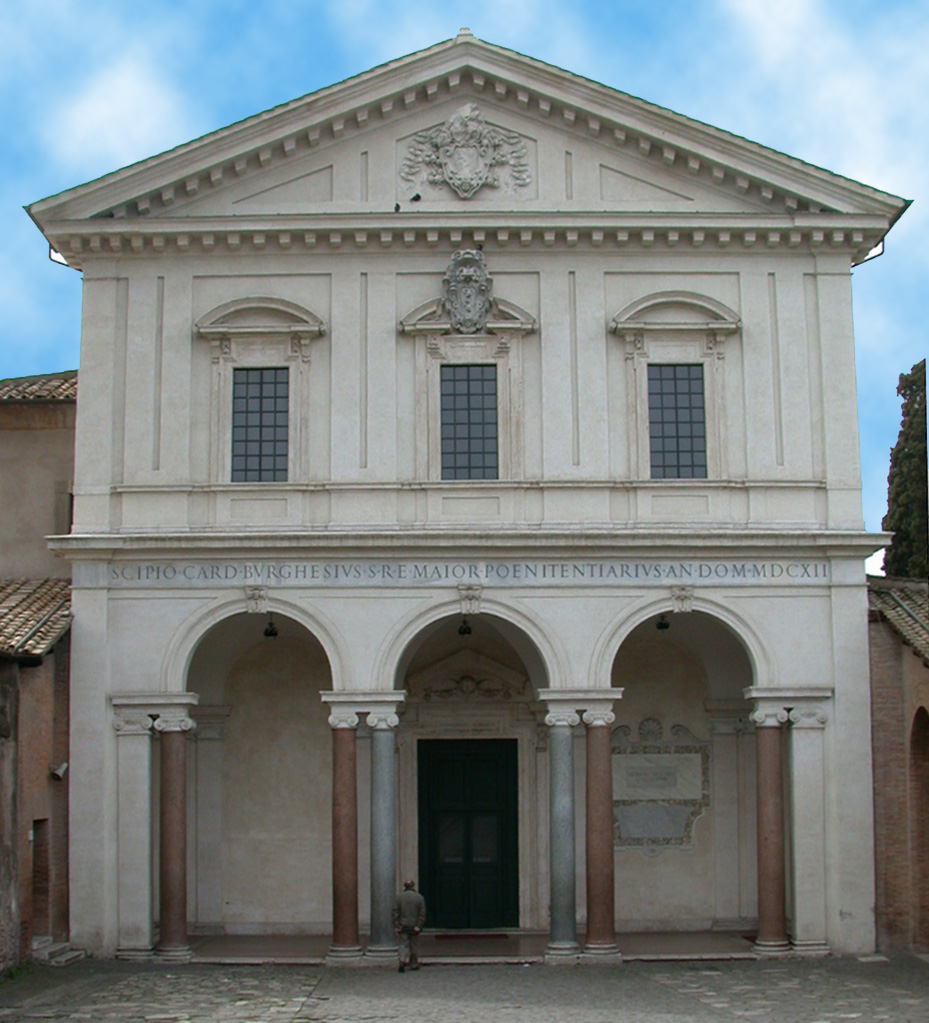
File:RomaSanSebastiano.jpg
San Sebastiano fuori le mura, Roma, Lazio, Italia.

The burial place of St. Sebastian lies on the old Appian Way to the south of the old city of Rome.  It lies in a part of the countryside rich with catacombs, and, indeed, the Basilica of San Sebastiano fuori le mura lies above its own set of catacombs.  It was restored in the early 17th century at the behest of Scipio Cardinal Borghese, nephew of Pope Paul V.  The basilica was one of the Seven Major Basilicas of Rome (the four patriarchal basilicas, along with Santa Croce, San Lorenzo, and San Sebastiano) and long a focus of pilgrimage.  It also happens to house a splendid bust of Jesus Christ by Gianlorenzo Bernini.

You can visit their site here: Catacombs of San Sebastiano Official Site


Saint Fabian1.jpg
Pope St. Fabian, Giovanni di Paolo, c. 1450.

Today, 20 January, we also commemorate Pope St. Fabian (+250AD), a victim of the Decian persecution, who also rests in the same Basilica of San Sebastiano, after having originally been buried in the Crypt of the Popes in the Catacombs of San Callisto (Catacombs of San Callisto Official Site).

Old Catholic Encyclopedia: Pope St. Fabian

May we respond to the great witness of these Roman martyrs!

Live well!

Saturday, October 28, 2017

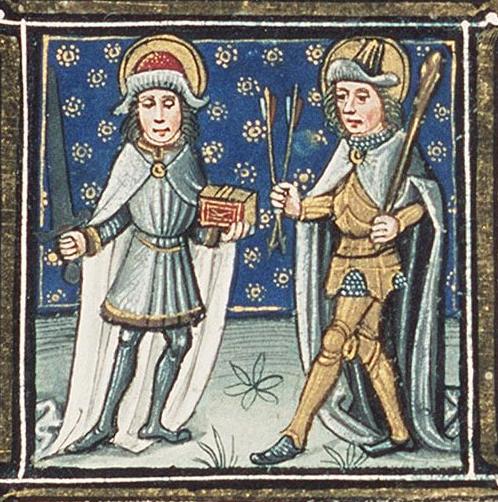
Feast of Sts. Simon & Jude, Apostles


Today is the feast of the Apostles Sts. Simon and Jude!  Both were, by tradition, martyred in Persia, and currently buried in St. Peter's at the Vatican.  (N.B:St. Peter's Basilica info: Left Side - St. Joseph's Altar)

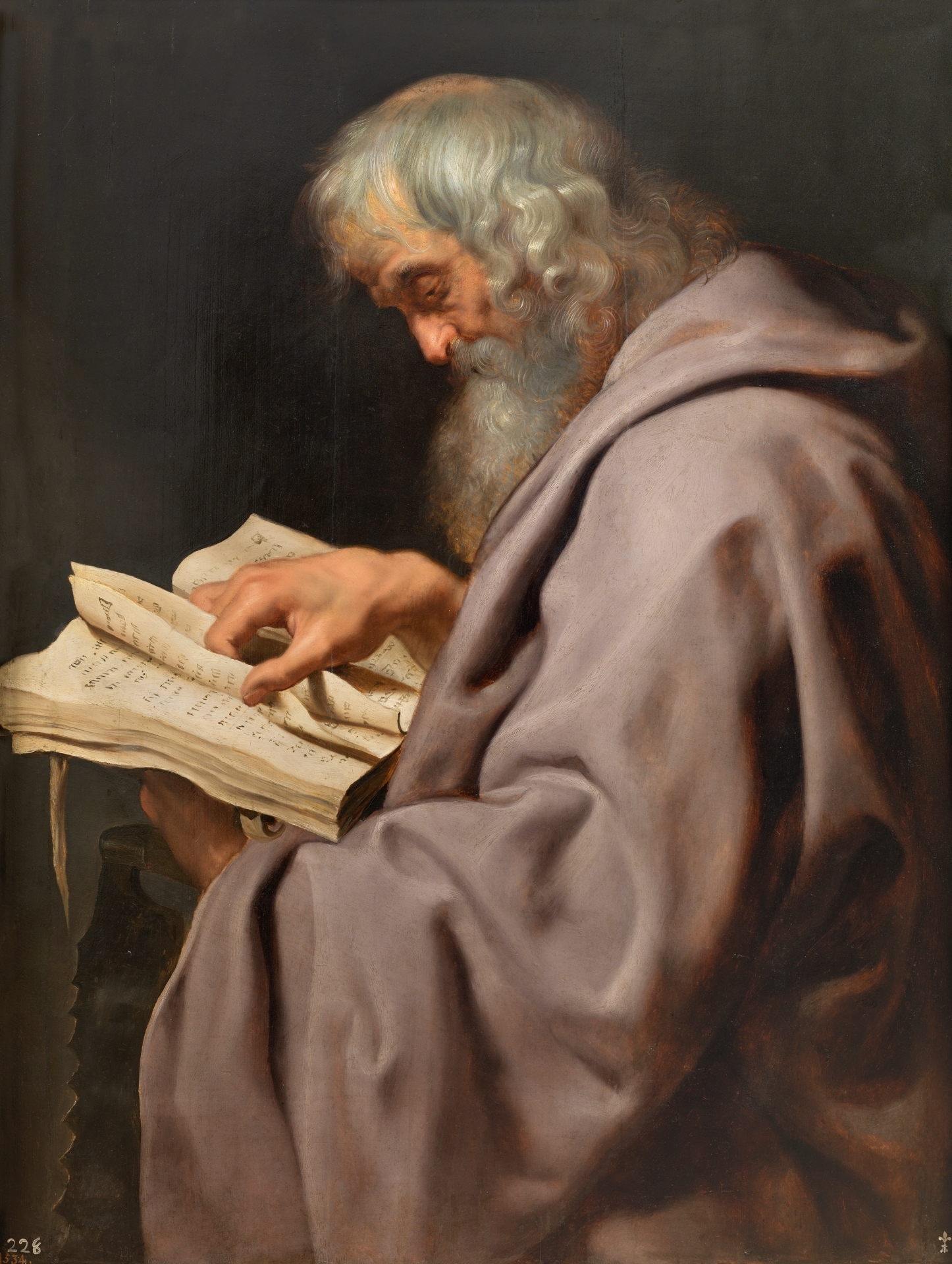
File:Rubens apostel simon.jpg
St. Simon by Peter Paul Rubens.

One of the original twelve, St. Simon is said to have preached in Egypt, before being sawed in two in Persia (modern Iran).

For more:
Old Catholic Encyclopedia: St. Simon

Catholic Saints Info: St. Simon

Butler's Lives of the Saints: St. Simon

File:Anthonis van Dyck 088.jpg
St. Jude by Anthony van Dyck.

St. Jude, famous now as the patron saint of hopeless cases, is also the author of an Epistle that bears his name.  He was the brother of St. James the Less.  Tradition has it that St. Jude preached in Mesopotamia before being martyred, like St. Simon, in Persia.

For more:
Old Catholic Encyclopedia: Epistle of St. Jude

Catholic Saints Info: St. Jude

Butler's Lives of the Saints: St. Jude

Perhaps today is a good day to listen to Gregorian Chant Kyrie IV, Cunctipotens Genitor Deus, associated with the Feasts of Apostles:


Live well!

Monday, August 21, 2017

The Great American Eclipse

Total solar eclipse
A view of a total solar eclipse [By I, Luc Viatour, CC BY-SA 3.0, https://commons.wikimedia.org/w/index.php?curid=1107408]


Today, 21 August 2017, is a date that has sat on my to-do calendar for quite a few years now: the date that a total solar eclipse will pass across the United States of America from Oregon to South Carolina, and will be visible as a partial eclipse over much of the rest of the country.


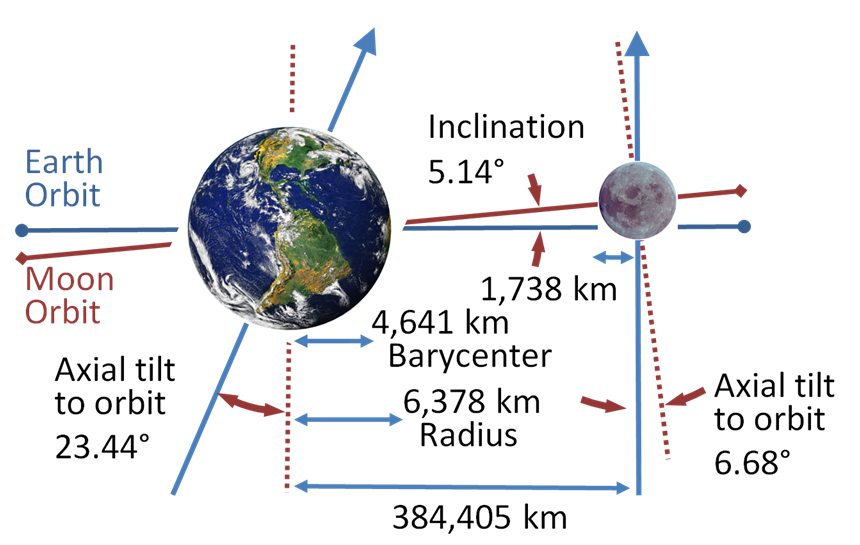
Geometry of a solar eclipse.

What is a solar eclipse?

Simply, it is the rather infrequent situation where the moon passes precisely between the sun and the earth, allowing its shadow to fall over a narrow part of the surface of the earth.  The means that for that narrow swath of land that falls in the shadow of the moon, the sun is blotted out for a few minutes.

Earth has a pronounced axial tilt; the Moon's orbit is not perpendicular to Earth's axis, but lies close to Earth's orbital plane.
This diagram illustrates how the moon orbits the earth at just over 5 degrees in divergence from that of the earth around the sun (or off of the ecliptic), meaning that solar eclipses are infrequent.


Of course, this can only occur when a moon is at its new moon phase.  Typically the new moon is simply invisible to us, and since the moon orbits the earth at a divergence from the ecliptic (the apparent path of the sun through the starts) of just over 5 degrees, most of the time the shadow of the moon entirely misses the earth.  The solar eclipse is an exception, however, and the total solar eclipse, in particular, is a dramatic deviation from the norm.

The difference between the partial and total solar eclipse is impressive, and this consideration illustrates: "Since the photosphere is 1 million times brighter than the corona, even a 99 percent partial eclipse still leaves 1 percent of 1 million times, or 10,000 times, more light from the photosphere than there is from the corona." -- Jay Pasachoff, Stars and Planets, 490-491.

For that reason, the total solar eclipse is described as one of the most compelling natural phenomenon.


Time-lapse of the 2008 total eclipse in 3 minute intervals. 
[By User:Kalan - Based on 38 own photos, CC BY 3.0, https://commons.wikimedia.org/w/index.php?curid=4512025]


Today, the remarkable experience of totality will occur for folks in the narrow band running coast-to-coast for around 2 minutes.  What a two minutes it should be!

For more information on the one that is occurring today, you might note some of the following resources.

This site, from NASA, gives you an interactive map of the eclipse route, allowing you to pin-point the time of the eclipse by location:
NASA Eclipse Route Map

Also from NASA, here is the link to the live broadcast of the event: NASA TV

This site will allow you to run a simulator to view what the eclipse will look like from any location: Eclipse Simulator

If you are looking to learn more about solar eclipses, or to teach about them, here is a useful resource: American Astronomical Society: Teaching the Eclipse

If you have the chance to see it, enjoy!

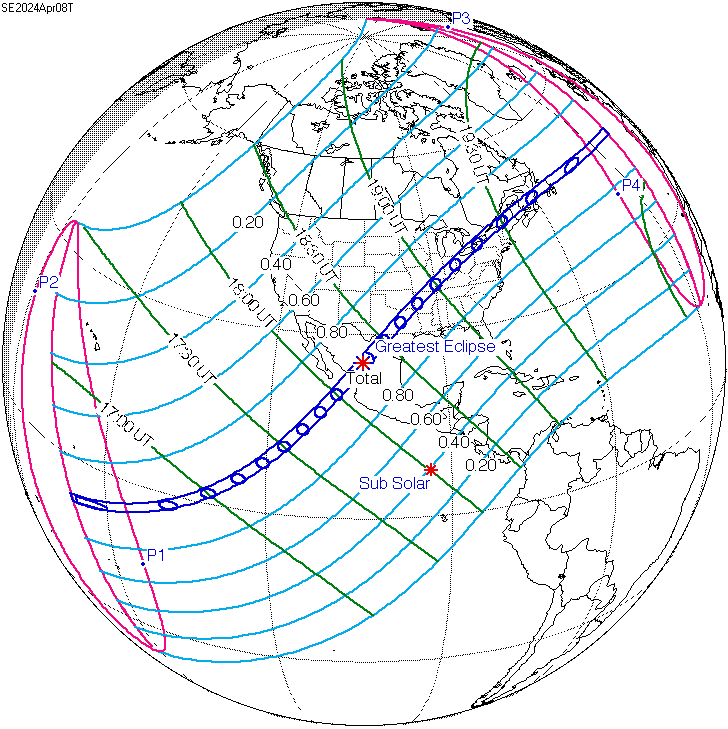
If you don't, well, the next total solar eclipse in the United States, at least, will come on 8 April 2024, so you might put that on your calendar...

SE2024Apr08T.png
The 8 April 2024 total solar eclipse map.

May these remarkable celestial events reinforce for all of us the greatness of our Creator who set it all in motion...

Live well!

Saturday, May 13, 2017

Feast of St. Robert Bellarmine, SJ, Cardinal & Doctor

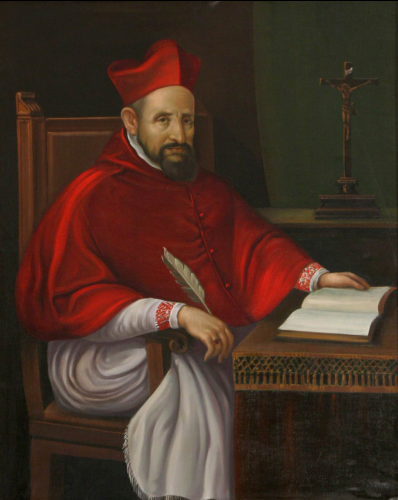
File:Saint Robert Bellarmine.png
St. Robert Bellarmine, SJ (+1621)

This blog, Ars bene moriendi, is named for the great work of the Jesuit, Cardinal, and Doctor of the Church, St. Robert Bellarmine.  This 17th century Saint of the Church was a great champion of the "counter Reformation" and, traditionally, his feast day was observed on 13 May.  In the revised calendar of 1970, the feast of St. Robert Bellarmine was transferred to 17 September, which is the anniversary of his death in 1621AD.

St. Robert was a great scholar and a great saint.  The Old Catholic Encyclopedia notes of his life: "A distinguished Jesuit theologian, writer, and cardinal, born at Montepulciano, 4 October, 1542; died 17 September, 1621. His father was Vincenzo Bellarmino, his mother Cinthia Cervini, sister of Cardinal Marcello Cervini, afterwards Pope Marcellus II. He was brought up at the newly founded Jesuit college in his native town, and entered the Society of Jesus on 20 September, 1560, being admitted to his first vows on the following day. The next three years he spent in studying philosophy at the Roman College, after which he taught the humanities first at Florence, then at Mondovì. In 1567 he began his theology at Padua, but in 1569 was sent to finish it at Louvain, where he could obtain a fuller acquaintance with the prevailing heresies. Having been ordained there, he quickly obtained a reputation both as a professor and a preacher, in the latter capacity drawing to his pulpit both Catholics and Protestants, even from distant parts. In 1576 he was recalled to Italy, and entrusted with the chair of Controversies recently founded at the Roman College. He proved himself equal to the arduous task, and the lectures thus delivered grew into the work "De Controversiis" which, amidst so much else of excellence, forms the chief title to his greatness. This monumental work was the earliest attempt to systematize the various controversies of the time, and made an immense impression throughout Europe, the blow it dealt to Protestantism being so acutely felt in Germany and England that special chairs were founded in order to provide replies to it. Nor has it even yet been superseded as the classical book on its subject-matter, though, as was to be expected, the progress of criticism has impaired the value of some of its historical arguments.

In 1588 Bellarmine was made Spiritual Father to the Roman College, but in 1590 he went with Cardinal Gaetano as theologian to the embassy Sixtus V was then sending into France to protect the interests of the Church amidst the troubles of the civil wars....Gaetano's mission now terminating, Bellarmine resumed his work as Spiritual Father, and had the consolation of guiding the last years of St. Aloysius Gonzaga, who died in the Roman College in 1591. Many years later he had the further consolation of successfully promoting the beatification of the saintly youth. Likewise at this time he sat on the final commission for the revision of the Vulgate text. This revision had been desired by the Council of Trent, and subsequent popes had laboured over the task and had almost brought it to completion....In 1592 Bellarmine was made Rector of the Roman College, and in 1595 Provincial of Naples. In 1597 Clement VIII recalled him to Rome and made him his own theologian and likewise Examiner of Bishops and Consultor of the Holy Office. Further, in 1599 he made him Cardinal-Priest of the title of Santa Maria in viâ, alleging as his reason for this promotion that 'the Church of God had not his equal in learning'."

The Old Catholic Encyclopedia concludes by describing him thus: "His spirit of prayer, his singular delicacy of conscience and freedom from sin, his spirit of humility and poverty, together with the disinterestedness which he displayed as much under the cardinal's robes as under the Jesuit's gown, his lavish charity to the poor, and his devotedness to work, had combined to impress those who knew him intimately with the feeling that he was of the number of the saints."


He lived, then, in the era of the Reforms of Trent, the French Wars of Religion, the reign of James I of England, and the Galileo Case, each of which was a matter that St. Robert, as a prince of the Church, had occasion to deal with.  He would die in 1621, and is buried in the Jesuit Church of Sant'Ignazio in Rome.


The Apse of the Roman Church of Sant'Ignazio, where St. Robert is buried.
["Lazio Roma SIgnazio tango7174" by Tango7174 - Own work. Licensed under GFDL via Commons]

Here is the website of the Church where he is buried in Rome: Chiesa di Sant'Ignazio

St. Robert was canonized in 1930 by Pope Pius XI and named a Doctor of the Church.  His feast until the reforms of Paul VI fell on 13 May -- it was moved to 17 September to correspond to the day of his death in that reform.

For a more detailed life of St. Robert, you might note these links:
Old Catholic Encyclopedia: St. Robert Bellarmine

Catholic Saints Info: St. Robert Bellarmine

For the text of his great work, Ars bene moriendi, on living and dying well, you should visit here:
St. Robert Bellarmine, Ars bene moriendi

In closing, it is interesting to note that, prior to his election, Pope Francis held the title of Cardinal-Priest of San Roberto Bellarmino.

Live well!

Saturday, December 24, 2016

Christmas Eve & Abies fraseri


The Visitation by Raphael

Today is the Eve of Christmas!  Traditionally, the vigil of such a significant feast was one of prayer and fasting.  The Catholic fasts before he feasts!

Fisheaters: Christmas Eve & Christmas

The Golden Legend of Blessed Jacobus de Voragine, OP, observes about this time of year, the end of Advent:
"As touching the coming of our Lord in our bodily flesh, we may consider three things of this coming, that is to wit, the opportunity, the necessity and the utility.

The opportunity of coming is taken by the reason of the man that first was vanquished in the law of nature of the default of the knowledge of God, by which he fell into evil errors, and therefore he was constrained to cry to God: Illumina oculos meos, that is to say, Lord, give light to mine eyes. After, came the law of God, which hath given commandment in which he hath been overcome of impuissance, as first he hath cried: There is none that fulfilleth but that commandeth. For there he is only taught, but not delivered from sin, ne holpen by grace, and therefore he was constrained to cry: There lacketh none to command, but there is none that accomplished the commandment. Then came the Son of God in time when man was vanquished of ignorance and impuissance. To that if he had so come tofore, peradventure man might say that by his own merits he might have been saved, and thus he had not been bound to yield thanks to God.

The second thing that is shown us of this coming is the necessity by reason of the time, of which the apostle Paul speaketh, ad Galatas the fourth chapter: At ubi venit plenitudo temporis, when the plentitude or full time of the grace of God was ordained, then he sent his Son that was God and Son of the virgin and wife which was made subject to the law. To that, that they be subject to the law he bought them again, and were received sons of God by grace of adoption. Now saith S. Austin that many demand why he came not rather. He answered that it was because that the plentitude of time was not come, which should come by him, that all things were ordained and made, and after when this plentitude of time came, he came that of time past hath delivered us, to that we shall bedelivered of time, we shall come to him whereas no time passeth, but is perpetuity. The third thing that is showed to us of this coming is the utility and profit that cometh for the cause of the hurt and sickness general. For sith the malady was general, the medicine must be general, whereof saith S. Austin that: Then came the great medicine, when the great malady was through all the world.

Whereof the holy Church remembereth in the seven anthems that be sung before the nativity of our Lord, where the malady is showed in divers manners, and for each demandeth remedy of his malady of prisoner out of the prison that sitteth in darkness and shadow of death. For they that have been long in prison and dark places may not see clearly, but have their eyes dim. Therefore, after we be delivered from prison, it behoveth that our eyes be made clear and our sight illumined for to see whither we should go, and therefore we cry in the fifth anthem: O Oriens splendor lucis eterne, veni et illumina sedentes in tenebris et umbra mortis, O Orient that art the resplendour of the eternal light, come and illumine them that sit in darkness and shadow of death, and if we were taught, lighted, unbound, and bought, what should it avail to us but if we should be saved? And, therefore, we require to be saved, and therefore we say in the two last anthems, the sixth and the seventh; when we cry: O Rex gentium, veni et salva hominem quem de limo formasti, O thou King of peoples come and save the man that thou hast formed of the slime of the earth; and in the seventh: O Emmanuel rex et legifer noster veni ad saluandum nos, domine deus noster, O Emmanuel that art our King, and bearer of our law, our Lord, our God, come and save us.

The profit of his coming is assigned of many saints in many manners, for Luke saith in the fourth chapter that our Lord was sent and came to us for seven profits, where he saith: The Spirit of our Lord is on me, which he rehearseth by order; he was sent for the comfort of the poor, to heal them that were sick in sin, to deliver them that were in prison, to teach them that were uncunning. To forgive sins, to buy again all mankind. And for to give reward to them that deserve it.

And S. Austin putteth here three profits of his coming and saith: In this wretched world what aboundeth but to be born to labour and to die. These be the merchandise of our region, and to these merchandises the noble merchant Jesus descended. And because all merchants give and take, they give that they have and take that they have not; Jesu Christ in this merchandise gave and took, he took that which in this world aboundeth, that is to wit, to be born to labour and to die, he gave again to us to be born spiritually, to rise and reign perdurably. And he himself came to us to take villanies and to give to us honour, to suffer death and to give us life, to take poverty and to give us glory.

S. Gregory putteth four causes of the profit of his coming: Studebant omnes superbi de eadem stirpe progeniti, prospera vitæ præsentis appetere, adversa devitare, opprobria fugere, gloriam sequi: They of the world, in their pride descended of the same lineage, studied to desire the prosperity of this present life, to eschew the adversities, to flee the reproofs and shames and to ensue the glory of the world. And our Lord came incarnate among them, asking and seeking the adversities, despiting the prosperities, embracing villanies, fleeing all vain glory. And he himself which descended from glory, came, and he being come, taught new things, and in showing marvels suffered many evils.

S. Bernard putteth other causes, and saith that, we travail in this world for three manner of maladies or sickness, for we be lightly deceived, feeble to do well, and frail to resist against evil. If we entend to do well we fail, it we do pain to resist the evil, we be surmounted and overcome; and for this the coming of Jesu Christ was to us necessary. To that he inhabiteth in us, by faith he illumineth our eyes of the heart, and in abiding with us he helpeth us in our malady, and in being with us he defendeth our frailty against our enemies." (Golden Legend, Advent of the Lord)


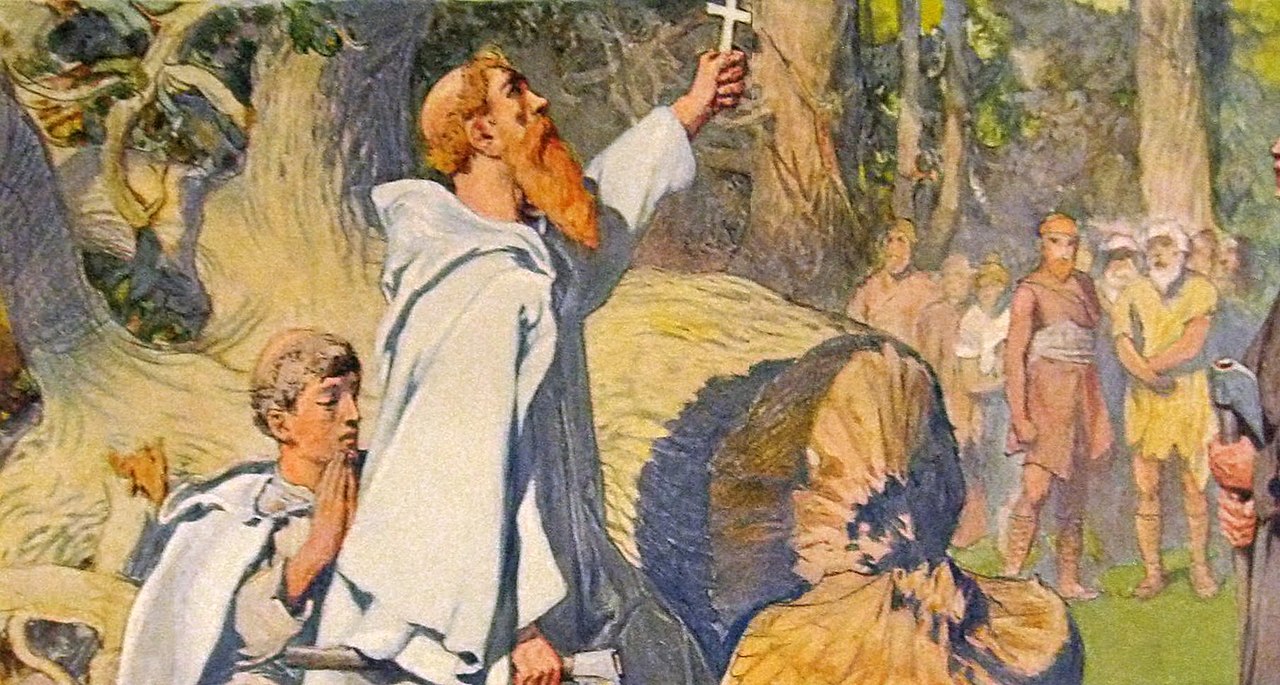
St. Boniface and Donar's Oak, by Doepler

By now, most of you have also put up your Christmas trees.  The tree is a beautiful symbol of the season.  The evergreen leaves remind us of the eternal life won by our great saviour, and the shape points us to heaven.

We might recall, too, the great story of St. Boniface (+754AD), Apostle to the Germans, felling the great oak, sacred to the pagans, recalled in the Life of St. Boniface by Willibald:
"Now many of the Hessians who at that time had acknowledged the Catholic faith were confirmed by the grace of the Holy Spirit and received the laying-on of hands. But others, not yet strong in the spirit, refused to accept the pure teachings of the church in their entirety. Moreover, some continued secretly, others openly, to offer sacrifices to trees and springs, to inspect the entrails of victims; some practiced divination, legerdemain, and incantations; some turned their attention to auguries, auspices, and other sacrificial rites; while others, of a more reasonable character, forsook all the profane practices of the Gentiles [i.e., pagans] and committed none of these crimes. With the counsel and advice of the latter persons, Boniface in their presence attempted to cut down, at a place called Gaesmere, a certain oak of extraordinary size called in the old tongue of the pagans the Oak of Jupiter. Taking his courage in his hands (for a great crowd of pagans stood by watching and bitterly cursing in their hearts the enemy of the gods), he cut the first notch. But when he had made a superficial cut . Suddenly, the oak's vast bulk, shaken by a mighty blast of wind from above crashed to the ground shivering its topmost branches into fragments in its fall. As if by the express will of God (for the brethren present had done nothing to cause it) the oak burst asunder into four parts, each part having a trunk of equal length. At the sight of this extraordinary spectacle the heathens who had been cursing ceased to revile and began, on the contrary, to believe and bless the Lord. Thereupon the holy bishop took counsel with the brethren, built an oratory from the timber of the oak and dedicated it to Saint Peter the Apostle." (Willibald: Life of St. Boniface)

It is said that St. Boniface also pointed to a diminutive conifer, using its size, evergreen leaves, and triangular form, as a contrast to the oak of the pagans.  Here's hoping you don't have a Christmas oak!

Here is a little article, from L'Osservatore Romano, on the subject: The Christmas Tree: Legends, Traditions, History in L'Osservatore Romano


Abies fraseri cone.jpg
Cone and foliage of the Abies fraseri.
["Abies fraseri cone". Licensed under CC BY-SA 3.0 via Commons]

This blogger's family tree is a Fraser Fir (Abies fraseri), a species of conifer that seems now to dominate the Christmas tree selections in this, the Southern, part of the United States.  It is a native fir of the southern Appalachians, named for the Scottish botanist, John Fraser (+1811AD), who discovered it and brought some specimen back to Europe.  In parts of the mountains, it is known as "she-balsam."  Interestingly, it is the only species of fir native to the Great Smoky Mountains National Park.  It is rather similar in form and appearance to the more widely ranging Balsam Fir (Abies balsamea) of the great north woods.

Abies fraseri range map 4.png
Native range of the Fraser Fir (Abies fraseri)

The rather restricted native range of the Fraser Fir has now been rather well supplemented by its commercial use.  It is no wonder, it is a delightful tree with excellent form, pleasant fragrance, and good needle retention qualities even after it begins to dry.

Whatever manner of tree you may or may not have, may your spiritual life be evergreen, and surely directed to the God in heaven.  My your Christmas Eve be blessed, and your heart prepared to receive the Holy Saviour!

Live well!

Monday, December 19, 2016

Electoral College & Election Day

Today, 19 December 2016, the electors, each state's members of the Electoral College, will meet to cast their ballots for President and Vice President in their respective state capitals.  That means that today is, strictly speaking, election day for the President of the United States.

On 6 January 2017 these ballots will be counted officially before a joint session of Congress under the direction of the President of the Senate, who also happens to be the Vice President of the United States.

At present, all of the states do determine their slate of electors by means of a popular vote.  In the past, some states have simply had the state legislatures choose the electors.  South Carolina, for instance, chose this method until the American Civil War.

Here is a map of the results of the popular votes by state:

2016 November election results; by popular vote.  The dark red, the larger majority for Donald Trump (GOP) and the darker blue the larger majority for Hillary Clinton (Dem).  Thus, the baby blue and light pink are the closest contests.  If every elector votes as elected to vote, it will be in favor of Trump 306-232.
[Source: By Ali Zifan - File:Electoral College 2016.svg, CC BY-SA 4.0, https://commons.wikimedia.org/w/index.php?curid=53004568]


In the event of a tie, or if no candidate receives more than 50% of the ballots, the House of Representatives is charged with electing the President, with each state Congressional delegation receiving a vote; the Senate is to elect the new Vice President.

ElectoralCollege1824.svg
Map of the splendidly dramatic Presidential Election of 1824.  In this case, the House elected J. Q. Adams, even though Jackson has won more electoral votes.  A good reminder that you need a full 50% of the electoral votes, or it goes to the House of Representatives!


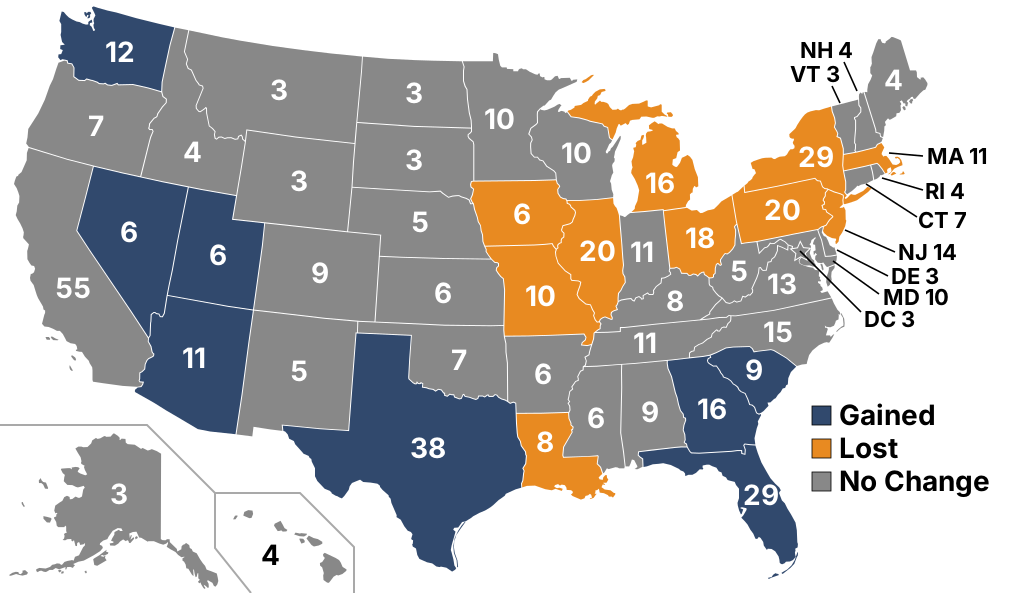
Each state is accorded as many presidential electors as it has members of Congress -- the minimum being 3 for those states with two senators and a single member of the House of Representatives.  In all but two states, the popular vote determines the slate of electors by a winner-take-all format -- if one candidate's electors win by a single vote, all the electors of that state will be of that persuasion.  In those two states, Nebraska and Maine, the statewide popular vote winner gets 2 electors, and the other electors are tied to winning the Congressional districts of that state.

Interestingly, the only three states have had the greatest number of electors over the course of American History: Virginia (1789-1808), New York (1812-1968), and California (1972-Present).  Virginia at its peak in 1804-1808 had 24 electoral votes, New York reached 47 from 1932-1948, and California sits at the all time high of 55 right now.

File:Electoral College 2012.svg
Map of the current allotment of Electors for each state, noting the change from the last census.

Of course, the origin of this system, for which there is a great deal to say in its favor, is the United States Constitution, which, in Article II, Section 1, directs:

----
The executive Power shall be vested in a President of the United States of America. He shall hold his Office during the Term of four Years, and, together with the Vice President, chosen for the same Term, be elected, as follows:

Each State shall appoint, in such Manner as the Legislature thereof may direct, a Number of Electors, equal to the whole Number of Senators and Representatives to which the State may be entitled in the Congress: but no Senator or Representative, or Person holding an Office of Trust or Profit under the United States, shall be appointed an Elector.

[The Electors shall meet in their respective states and vote by ballot for President and Vice-President, one of whom, at least, shall not be an inhabitant of the same state with themselves; they shall name in their ballots the person voted for as President, and in distinct ballots the person voted for as Vice-President, and they shall make distinct lists of all persons voted for as President, and of all persons voted for as Vice-President, and of the number of votes for each, which lists they shall sign and certify, and transmit sealed to the seat of the government of the United States, directed to the President of the Senate; -- the President of the Senate shall, in the presence of the Senate and House of Representatives, open all the certificates and the votes shall then be counted; -- The person having the greatest number of votes for President, shall be the President, if such number be a majority of the whole number of Electors appointed; and if no person have such majority, then from the persons having the highest numbers not exceeding three on the list of those voted for as President, the House of Representatives shall choose immediately, by ballot, the President. But in choosing the President, the votes shall be taken by states, the representation from each state having one vote; a quorum for this purpose shall consist of a member or members from two-thirds of the states, and a majority of all the states shall be necessary to a choice.  The person having the greatest number of votes as Vice-President, shall be the Vice-President, if such number be a majority of the whole number of Electors appointed, and if no person have a majority, then from the two highest numbers on the list, the Senate shall choose the Vice-President; a quorum for the purpose shall consist of two-thirds of the whole number of Senators, and a majority of the whole number shall be necessary to a choice. But no person constitutionally ineligible to the office of President shall be eligible to that of Vice-President of the United States.]

(N.B., the section in the [ ] amended by the XII Amendment.)
-----

For more information on the Electoral College, you should certainly note this page run by the National Archives and Records Administration: Archives.gov: Electoral College

It kind of reminds me of the Electoral College of the Holy Roman Empire.  Almost.

Live well!

Saturday, November 5, 2016

Pope Leo XIII on Politics

File:LeoXIII1900.jpg
Pope Leo XIII (+1903)

Pope Leo XIII (reigned 1878-1903) is certainly one of the most eloquent pontiffs of the modern age, and can be counted on for a clear and concise exposition of the Faith.

Considering the upcoming election, now is a splendid time to note a couple selections of Leo's writtings on subjects of a political and economic nature.  The selections that follow are from encyclical letters on the subjects of true Liberty, on the Origin of Civil Power, on the Christian Constitution of States, and on Capital and Labor.

Thus, Pope Leo XIII:
----

Libertas Praestantissimum (On Liberty), 1888


9. What has been said of the liberty of individuals is no less applicable to them when considered as bound together in civil society. For, what reason and the natural law do for individuals. that human law promulgated for their good, does for the citizens of States. Of the laws enacted by men, some are concerned with what is good or bad by its very nature; and they command men to follow after what is right and to shun what is wrong, adding at the same time a suitable sanction. But such laws by no means derive their origin from civil society, because, just as civil society did not create human nature, so neither can it be said to be the author of the good which befits human nature, or of the evil which is contrary to it. Laws come before men live together in society, and have their origin in the natural, and consequently in the eternal, law. The precepts, therefore, of the natural law, contained bodily in the laws of men, have not merely the force of human law, but they possess that higher and more august sanction which belongs to the law of nature and the eternal law. And within the sphere of this kind of laws the duty of the civil legislator is, mainly, to keep the community in obedience by the adoption of a common discipline and by putting restraint upon refractory and viciously inclined men, so that, deterred from evil, they may turn to what is good, or at any rate may avoid causing trouble and disturbance to the State. Now, there are other enactments of the civil authority, which do not follow directly, but somewhat remotely, from the natural law, and decide many points which the law of nature treats only in a general and indefinite way. For instance, though nature commands all to contribute to the public peace and prosperity, whatever belongs to the manner, and circumstances, and conditions under which such service is to be rendered must be determined by the wisdom of men and not by nature herself. It is in the constitution of these particular rules of life, suggested by reason and prudence, and put forth by competent authority, that human law, properly so called, consists, binding all citizens to work together for the attainment of the common end proposed to the community, and forbidding them to depart from this end, and, in so far as human law is in conformity with the dictates of nature, leading to what is good, and deterring from evil.

10. From this it is manifest that the eternal law of God is the sole standard and rule of human liberty, not only in each individual man, but also in the community and civil society which men constitute when united. Therefore, the true liberty of human society does not consist in every man doing what he pleases, for this would simply end in turmoil and confusion, and bring on the overthrow of the State; but rather in this, that through the injunctions of the civil law all may more easily conform to the prescriptions of the eternal law. Likewise, the liberty of those who are in authority does not consist in the power to lay unreasonable and capricious commands upon their subjects, which would equally be criminal and would lead to the ruin of the commonwealth; but the binding force of human laws is in this, that they are to be regarded as applications of the eternal law, and incapable of sanctioning anything which is not contained in the eternal law, as in the principle of all law. Thus, St. Augustine most wisely says: "I think that you can see, at the same time, that there is nothing just and lawful in that temporal law, unless what men have gathered from this eternal law." If, then, by anyone in authority, something be sanctioned out of conformity with the principles of right reason, and consequently hurtful to the commonwealth, such an enactment can have no binding force of law, as being no rule of justice, but certain to lead men away from that good which is the very end of civil society.

30. Another liberty is widely advocated, namely, liberty of conscience. If by this is meant that everyone may, as he chooses, worship God or not, it is sufficiently refuted by the arguments already adduced. But it may also be taken to mean that every man in the State may follow the will of God and, from a consciousness of duty and free from every obstacle, obey His commands. This, indeed, is true liberty, a liberty worthy of the sons of God, which nobly maintains the dignity of man and is stronger than all violence or wrong -- a liberty which the Church has always desired and held most dear. This is the kind of liberty the Apostles claimed for themselves with intrepid constancy, which the apologists of Christianity confirmed by their writings, and which the martyrs in vast numbers consecrated by their blood. And deservedly so; for this Christian liberty bears witness to the absolute and most just dominion of God over man, and to the chief and supreme duty of man toward God. It has nothing in common with a seditious and rebellious mind; and in no tittle derogates from obedience to public authority; for the right to command and to require obedience exists only so far as it is in accordance with the authority of God, and is within the measure that He has laid down. But when anything is commanded which is plainly at variance with the will of God, there is a wide departure from this divinely constituted order, and at the same time a direct conflict with divine authority; therefore, it is right not to obey.

31. By the patrons of liberalism, however, who make the State absolute and omnipotent, and proclaim that man should live altogether independently of God, the liberty of which We speak, which goes hand in hand with virtue and religion, is not admitted; and whatever is done for its preservation is accounted an injury and an offense against the State. Indeed, if what they say were really true, there would be no tyranny, no matter how monstrous, which we should not be bound to endure and submit to.                                                      Full text at: http://www.papalencyclicals.net/Leo13/l13liber.htm


Diuturnum (On the Origin of Civil Power), 1881

19. This great modesty, this fixed determination to obey, was so well known that it could not be obscured by the calumny and malice of enemies. On this account, those who were going to plead in public before the emperors for any persons bearing the Christian name proved by this argument especially that it was unjust to enact laws against the Christians because they were in the sight of all men exemplary in their bearing according to the laws. Athenagoras thus confidently addresses Marcus Aurelius Antoninus and Lucius Aurelius Commodus, his son: "You allow us, who commit no evil, yea, who demean ourselves the most piously and justly of all toward God and likewise toward your government, to be driven about, plundered and exiled." In like manner, Tertullian openly praises the Christians because they were the best and surest friends of all to the Empire: "The Christian is the enemy of no one, much less of the emperor, whom he knows to be appointed by God, and whom he must, therefore, of necessity love, reverence and honor, and wish to be preserved together with the whole Roman Empire." Nor did he hesitate to affirm that, within the limits of the Empire, the number of enemies was wont to diminish just in proportion as the number of Christians increased. There is also a remarkable testimony to the same point in the Epistle to Diognetus, which confirms the statement that the Christians at that period were not only in the habit of obeying the laws, but in every office they of their own accord did more, and more perfectly, than they were required to do by the laws. "Christians observe these things which have obtained the sanction of the law, and in the character of their lives they even go beyond the law."

20. The case, indeed, was different when they were ordered by the edicts of emperors and the threats of praetors to abandon the Christian faith or in any way fail in their duty. At these times, undoubtedly, they preferred to displease men rather than God. Yet, even under these circumstances, they were so far from doing anything seditious or despising the imperial majesty that they took it on themselves only to profess themselves Christians, and declare that they would not in any way alter their faith. But they had no thought of resistance, calmly and joyfully they went to the torture of the rack, in so much that the magnitude of the torments gave place to their magnitude of mind. During the same period the force of Christian principles was observed in like manner in the army. For it was a mark of a Christian soldier to combine the greatest fortitude with the greatest attention to military discipline, and to add to nobility of mind immovable fidelity towards his prince. But, if anything dishonorable was required of him, as, for instance, to break the laws of God, or to turn his sword against innocent disciples of Christ, then, indeed, he refused to execute the orders, yet in such wise that he would rather retire from the army and die for his religion than oppose the public authority by means of sedition and tumult.                                   Full text: http://www.papalencyclicals.net/Leo13/l13civ.htm


IMMORTALE DEI


ON THE CHRISTIAN CONSTITUTION OF STATES

ENCYCLICAL OF POPE LEO XIII NOVEMBER 1, 1885


3. …Man's natural instinct moves him to live in civil society, for he cannot, if dwelling apart, provide himself with the necessary requirements of life, nor procure the means of developing his mental and moral faculties. Hence, it is divinely ordained that he should lead his life -- be it family, or civil -- with his fellow men, amongst whom alone his several wants can be adequately supplied. But, as no society can hold together unless some one be over all, directing all to strive earnestly for the common good, every body politic must have a ruling authority, and this authority, no less than society itself, has its source in nature, and has, consequently, God for its Author. Hence, it follows that all public power must proceed from God. For God alone is the true and supreme Lord of the world…

4. The right to rule is not necessarily, however, bound up with any special mode of government. It may take this or that form, provided only that it be of a nature of the government, rulers must ever bear in mind that God is the paramount ruler of the world, and must set Him before themselves as their exemplar and law in the administration of the State…

5. They, therefore, who rule should rule with evenhanded justice, not as masters, but rather as fathers, for the rule of God over man is most just, and is tempered always with a father's kindness. Government should, moreover, be administered for the well-being of the citizens, because they who govern others possess authority solely for the welfare of the State. Furthermore, the civil power must not be subservient to the advantage of any one individual or of some few persons, inasmuch as it was established for the common good of all. But, if those who are in authority rule unjustly, if they govern overbearingly or arrogantly, and if their measures prove hurtful to the people, they must remember that the Almighty will one day bring them to account, the more strictly in proportion to the sacredness of their office and preeminence of their dignity. "The mighty shall be mightily tormented." Then, truly, will the majesty of the law meet with the dutiful and willing homage of the people, when they are convinced that their rulers hold authority from God, and feel that it is a matter of justice and duty to obey them, and to show them reverence and fealty, united to a love not unlike that which children show their parents. "Let every soul be subject to higher powers." To despise legitimate authority, in whomsoever vested, is unlawful, as a rebellion against the divine will, and whoever resists that, rushes willfully to destruction. "He that resisteth the power resisteth the ordinance of God, and they that resist, purchase to themselves damnation."  To cast aside obedience, and by popular violence to incite to revolt, is therefore treason, not against man only, but against God.

6. As a consequence, the State, constituted as it is, is clearly bound to act up to the manifold and weighty duties linking it to God, by the public profession of religion. Nature and reason, which command every individual devoutly to worship God in holiness, because we belong to Him and must return to Him, since from Him we came, bind also the civil community by a like law. For, men living together in society are under the power of God no less than individuals are, and society, no less than individuals, owes gratitude to God who gave it being and maintains it and whose ever bounteous goodness enriches it with countless blessings. Since, then, no one is allowed to be remiss in the service due to God, and since the chief duty of all men is to cling to religion in both its teaching and practice-not such religion as they may have a preference for, but the religion which God enjoins, and which certain and most clear marks show to be the only one true religion -- it is a public crime to act as though there were no God. So, too, is it a sin for the State not to have care for religion as a something beyond its scope, or as of no practical benefit; or out of many forms of religion to adopt that one which chimes in with the fancy; for we are bound absolutely to worship God in that way which He has shown to be His will. All who rule, therefore, would hold in honor the holy name of God, and one of their chief duties must be to favor religion, to protect it, to shield it under the credit and sanction of the laws, and neither to organize nor enact any measure that may compromise its safety. This is the bounden duty of rulers to the people over whom they rule. For one and all are we destined by our birth and adoption to enjoy, when this frail and fleeting life is ended, a supreme and final good in heaven, and to the attainment of this every endeavor should be directed. Since, then, upon this depends the full and perfect happiness of mankind, the securing of this end should be of all imaginable interests the most urgent. Hence, civil society, established for the common welfare, should not only safeguard the wellbeing of the community, but have also at heart the interests of its individual members, in such mode as not in any way to hinder, but in every manner to render as easy as may be, the possession of that highest and unchangeable good for which all should seek. Wherefore, for this purpose, care must especially be taken to preserve unharmed and unimpeded the religion whereof the practice is the link connecting man with God.

25. The authority of God is passed over in silence, just as if there were no God; or as if He cared nothing for human society; or as if men, whether in their individual capacity or bound together in social relations, owed nothing to God; or as if there could be a government of which the whole origin and power and authority did not reside in God Himself. Thus, as is evident, a State becomes nothing but a multitude which is its own master and ruler. And since the people is declared to contain within itself the spring-head of all rights and of all power, it follows that the State does not consider itself bound by any kind of duty toward God. Moreover. it believes that it is not obliged to make public profession of any religion…

31. The sovereignty of the people, however, and this without any reference to God, is held to reside in the multitude; which is doubtless a doctrine exceedingly well calculated to flatter and to inflame many passions, but which lacks all reasonable proof, and all power of insuring public safety and preserving order. Indeed, from the prevalence of this teaching, things have come to such a pass that may hold as an axiom of civil jurisprudence that seditions may be rightfully fostered. For the opinion prevails that princes are nothing more than delegates chosen to carry out the will of the people; whence it necessarily follows that all things are as changeable as the will of the people, so that risk of public disturbance is ever hanging over our heads.

To hold, therefore, that there is no difference in matters of religion between forms that are unlike each other, and even contrary to each other, most clearly leads in the end to the rejection of all religion in both theory and practice. And this is the same thing as atheism, however it may differ from it in name. Men who really believe in the existence of God must, in order to be consistent with themselves and to avoid absurd conclusions, understand that differing modes of divine worship involving dissimilarity and conflict even on most important points cannot all be equally probable, equally good, and equally acceptable to God.

32. So, too, the liberty of thinking, and of publishing, whatsoever each one likes, without any hindrance, is not in itself an advantage over which society can wisely rejoice. On the contrary, it is the fountain-head and origin of many evils. Liberty is a power perfecting man, and hence should have truth and goodness for its object…

36. This, then, is the teaching of the Catholic Church concerning the constitution and government of the State. By the words and decrees just cited, if judged dispassionately, no one of the several forms of government is in itself condemned, inasmuch as none of them contains anything contrary to Catholic doctrine, and all of them are capable, if wisely and justly managed, to insure the welfare of the State. Neither is it blameworthy in itself, in any manner, for the people to have a share greater or less, in the government: for at certain times, and under certain laws, such participation may not only be of benefit to the citizens, but may even be of obligation. Nor is there any reason why any one should accuse the Church of being wanting in gentleness of action or largeness of view, or of being opposed to real and lawful liberty. The Church, indeed, deems it unlawful to place the various forms of divine worship on the same footing as the true religion, but does not, on that account, condemn those rulers who, for the sake of securing some great good or of hindering some great evil, allow patiently custom or usage to be a kind of sanction for each kind of religion having its place in the State. And, in fact, the Church is wont to take earnest heed that no one shall be forced to embrace the Catholic faith against his will, for, as St. Augustine wisely reminds us, "Man cannot believe otherwise than of his own will."


RERUM NOVARUM


ON CAPITAL AND LABOR

ENCYCLICAL OF POPE LEO XIII MAY 15, 1891


4. To remedy these wrongs the socialists, working on the poor man's envy of the rich, are striving to do away with private property, and contend that individual possessions should become the common property of all, to be administered by the State or by municipal bodies. They hold that by thus transferring property from private individuals to the community, the present mischievous state of things will be set to rights, inasmuch as each citizen will then get his fair share of whatever there is to enjoy. But their contentions are so clearly powerless to end the controversy that were they carried into effect the working man himself would be among the first to suffer. They are, moreover, emphatically unjust, for they would rob the lawful possessor, distort the functions of the State, and create utter confusion in the community.

41. From this follows the obligation of the cessation from work and labor on Sundays and certain holy days. The rest from labor is not to be understood as mere giving way to idleness; much less must it be an occasion for spending money and for vicious indulgence, as many would have it to be; but it should be rest from labor, hallowed by religion. Rest (combined with religious observances) disposes man to forget for a while the business of his everyday life, to turn his thoughts to things heavenly, and to the worship which he so strictly owes to the eternal Godhead. It is this, above all, which is the reason and motive of Sunday rest; a rest sanctioned by God's great law of the Ancient Covenant -- "Remember thou keep holy the Sabbath day,'' and taught to the world by His own mysterious "rest" after the creation of man: "He rested on the seventh day from all His work which He had done.”

45. Let the working man and the employer make free agreements, and in particular let them agree freely as to the wages; nevertheless, there underlies a dictate of natural justice more imperious and ancient than any bargain between man and man, namely, that wages ought not to be insufficient to support a frugal and well behaved wage-earner. If through necessity or fear of a worse evil the workman accept harder conditions because an employer or contractor will afford him no better, he is made the victim of force and injustice. In these and similar questions, however -- such as, for example, the hours of labor in different trades, the sanitary precautions to be observed in factories and workshops, etc. -- in order to supersede undue interference on the part of the State, especially as circumstances, times, and localities differ so widely, it is advisable that recourse be had to societies or boards such as We shall mention presently, or to some other mode of safeguarding the interests of the wage-earners; the State being appealed to, should circumstances require, for its sanction and protection.

46. If a workman's wages be sufficient to enable him comfortably to support himself, his wife, and his children, he will find it easy, if he be a sensible man, to practice thrift, and he will not fail, by cutting down expenses, to put by some little savings and thus secure a modest source of income. Nature itself would urge him to this. We have seen that this great labor question cannot be solved save by assuming as a principle that private ownership must be held sacred and inviolable. The law, therefore, should favor ownership, and its policy should be to induce as many as possible of the people to become owners.


----

Live, and vote, well!