This last weekend, on 5 May, his holiness, Pope Benedict XVI addressed the American Bishops of regions X-XIII (i.e., the bishops of AR, OK, TX, CA, NV, HI, AK, ID, MT, OR, WA, AZ, CO, NM, UT, and WY). The occasion was their ad limina visit to the Holy See at the Vatican.
In his address, Benedict XVI discussed, in particular, the issue of education, in what was a splendid and timely message. The full text is to be found here: http://www.vatican.va/holy_father/benedict_xvi/speeches/2012/may/documents/hf_ben-xvi_spe_20120505_us-bishops_en.html
Some highlights, which make up a sizable portion of the address, include:
"Important efforts are also being made to
preserve the great patrimony of America’s Catholic elementary and high schools,
which have been deeply affected by changing demographics and increased costs,
while at the same time ensuring that the education they provide remains within
the reach of all families, whatever their financial status."
"On the level of higher education...much remains to be done, especially in such basic areas as compliance with the
mandate laid down in Canon 812 for those who teach theological disciplines."
"It is no exaggeration to say that providing
young people with a sound education in the faith represents the most urgent
internal challenge facing the Catholic community in your country."
"It follows that the question of Catholic
identity, not least at the university level, entails much more than the
teaching of religion or the mere presence of a chaplaincy on campus."
"In every aspect of their education, students
need to be encouraged to articulate a vision of the harmony of faith and reason
capable of guiding a life-long pursuit of knowledge and virtue. As ever, an
essential role in this process is played by teachers who inspire others by
their evident love of Christ, their witness of sound devotion and their
commitment to that sapientia Christiana which integrates faith and life,
intellectual passion and reverence for the splendor of truth both human and
divine."
"In a period of great cultural change and
societal displacement not unlike our own, Augustine pointed to this intrinsic
connection between faith and the human intellectual enterprise by appealing to
Plato, who held, he says, that “to love wisdom is to love God” (cf. De
Civitate Dei, VIII, 8). The Christian commitment to learning, which gave
birth to the medieval universities, was based upon this conviction that the one
God, as the source of all truth and goodness, is likewise the source of the
intellect’s passionate desire to know and the will’s yearning for fulfilment in
love."
"At the present moment of your nation’s history,
this is the challenge and opportunity awaiting the entire Catholic community,
and it is one which the Church’s educational institutions should be the first
to acknowledge and embrace."
What a joy it would be if the oldest Catholic university in the United States, Georgetown, were to take the lead in responding to the Holy Father's call...
Wednesday, May 9, 2012

Tuesday, May 8, 2012
150th Anniversary of the Battle of McDowell, VA
Today, 150 Years ago, the Valley Army of CS Major General Thomas "Stonewall" Jackson fought a battle with forces of the Union Mountain Department at McDowell in Highland County, Virginia.
Back in March, Jackson had forcefully attacked superior Union forces around Winchester, VA at Kernstown, pinning down Union troops for the defense of Washington, DC and forcing Lincoln to allocate more men to eradicate him from the Shenandoah Valley. Now Jackson was being pinched -- US Maj. Gen. Nathaniel Banks was coming up the Valley from Harpers Ferry, and troops of the Mountain Department of US Maj. Gen. John C. Fremont approached from West Virginia. Meanwhile, a third force sat in Fredericksburg under Gen McDowell (who commanded Union forces at First Manassas). Jackson resolved to strike Fremont's men as the emerged from the Alleghenies.
At McDowell, Jackon's 9,000 men attacked Fremont's advance guard of 6,000 under US Generals Milroy and Schenck. Union forces attacked, but, in the end retired from the field, inflicting twice the casualties they received (256US to 500CS). This action, however, slowed the Union advance into the Valley, causing them to fall back into modern West Virginia and gave Jackson the time he needed to turn north to face the force under Banks back around Winchester. The chase is on!
For more description, this link goes to the National Park Service summary of the battle: http://www.cr.nps.gov/hps/abpp/battles/va102.htm
This link gives you the Civil War Daily Gazette description:
http://civilwardailygazette.com/2012/05/08/no-battle-expected-at-the-battle-of-mcdowell/

The strategic situation -- Jackson's march from the Battle of Kernstown, VA 23 March, to today's fight at McDowell, 8 May 1862. Map by Hal Jespersen
Back in March, Jackson had forcefully attacked superior Union forces around Winchester, VA at Kernstown, pinning down Union troops for the defense of Washington, DC and forcing Lincoln to allocate more men to eradicate him from the Shenandoah Valley. Now Jackson was being pinched -- US Maj. Gen. Nathaniel Banks was coming up the Valley from Harpers Ferry, and troops of the Mountain Department of US Maj. Gen. John C. Fremont approached from West Virginia. Meanwhile, a third force sat in Fredericksburg under Gen McDowell (who commanded Union forces at First Manassas). Jackson resolved to strike Fremont's men as the emerged from the Alleghenies.
At McDowell, Jackon's 9,000 men attacked Fremont's advance guard of 6,000 under US Generals Milroy and Schenck. Union forces attacked, but, in the end retired from the field, inflicting twice the casualties they received (256US to 500CS). This action, however, slowed the Union advance into the Valley, causing them to fall back into modern West Virginia and gave Jackson the time he needed to turn north to face the force under Banks back around Winchester. The chase is on!
For more description, this link goes to the National Park Service summary of the battle: http://www.cr.nps.gov/hps/abpp/battles/va102.htm
This link gives you the Civil War Daily Gazette description:
http://civilwardailygazette.com/2012/05/08/no-battle-expected-at-the-battle-of-mcdowell/
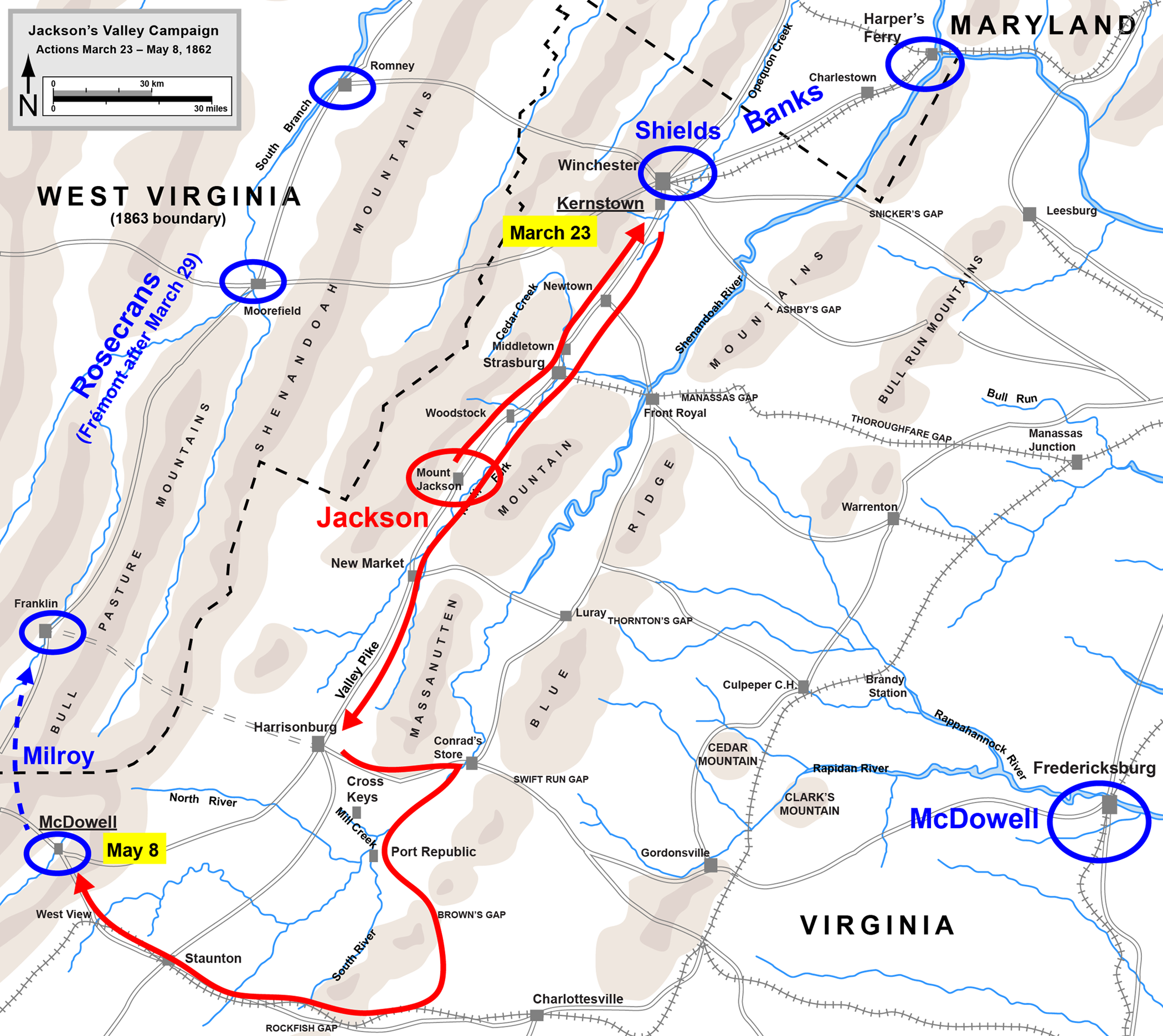
The strategic situation -- Jackson's march from the Battle of Kernstown, VA 23 March, to today's fight at McDowell, 8 May 1862. Map by Hal Jespersen
Monday, May 7, 2012
Carnivorous Plants
Certainly some of the more exotic and rewarding plants to cultivate are those that supplement their diet with living prey: the Carnivorous plants. Most are thought to capture and "digest" prey with their modified leaves for the purpose of obtaining minerals that are lacking in acidic swamp soil. All the same, it makes for some interesting vegetation. An excellent resource on this subject can be found here: http://www.sarracenia.com/faq.html
I have had the pleasure of cultivating species of three significant families of carnivorous plants: Droseraceae [Sundew & Venus fly-trap family], Sarraceniaceae [Pitcher-plant family], and Nepenthaceae [East Indian Pitcher-plant family].
The members of the family Droseraceae all share the characteristic of actively trapping some prey, usually an insect, either by using sticky droplets or the famous "fly-trap" jaw trap. Once the insect is captured, the leaf releases enzymes to digest the hapless critter. In the case of the Sundew, the leaf actually rolls over the prey.

The Roundleaf Sundew (Drosera rotundifolia).
The Venus fly-trap (Dionaea muscipula) of the Carolinas is the only member of the genus, and is justly famous. It also boasts a delightful and delicate white flower -- my speciman has bloomed the last two years.


Venus fly-trap (Dionaea muscipula)
The Sarraceniaceae include the provincial flower of Newfoundland and Labrador: the Purple Pitcher-plant (Sarracenia purpurea). In this family, the members have modified pitcher-like leaves that grow from the ground. There is no active leaf mechanism here -- the prey are attracted to the rim of the leaf with a sappy substance and simply slip into the broth of rainwater and enzymes where they drown and slowly dissolve. Purple Pitcher-plants also boast a distinctive maroon, down-turned flower. My speciman actually bloomed last year and has been rather easy to grow. They're are an impressive sight in the moors of the Southwest coast of Newfoundland!

Purple Pitcher-plant (Sarracenia purpurea)
Finally, the Nepenthaceae capture prey in much the same way as their American counterparts, but their pitchers actually grow as extentions off the tips of otherwise normal looking leaves. This leaves them looking much like a house-plant decked with peculiar Christmas ornaments! I have had great success growing a species from the Philippines, Nepenthes alata.

Nepenthes alata.
Happy growing!
I have had the pleasure of cultivating species of three significant families of carnivorous plants: Droseraceae [Sundew & Venus fly-trap family], Sarraceniaceae [Pitcher-plant family], and Nepenthaceae [East Indian Pitcher-plant family].
The members of the family Droseraceae all share the characteristic of actively trapping some prey, usually an insect, either by using sticky droplets or the famous "fly-trap" jaw trap. Once the insect is captured, the leaf releases enzymes to digest the hapless critter. In the case of the Sundew, the leaf actually rolls over the prey.

The Roundleaf Sundew (Drosera rotundifolia).
The Venus fly-trap (Dionaea muscipula) of the Carolinas is the only member of the genus, and is justly famous. It also boasts a delightful and delicate white flower -- my speciman has bloomed the last two years.
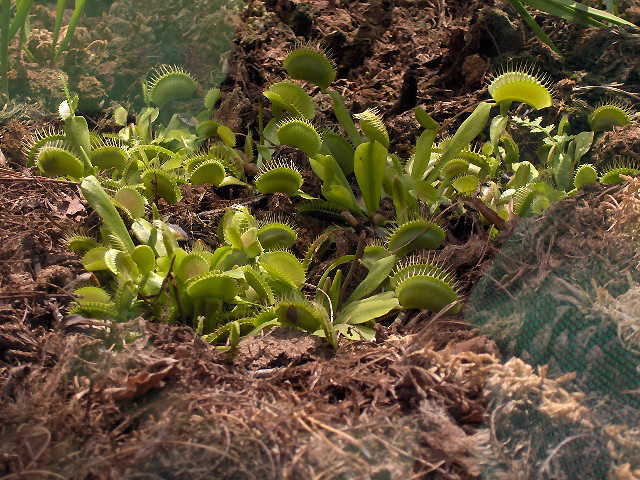


Venus fly-trap (Dionaea muscipula)
The Sarraceniaceae include the provincial flower of Newfoundland and Labrador: the Purple Pitcher-plant (Sarracenia purpurea). In this family, the members have modified pitcher-like leaves that grow from the ground. There is no active leaf mechanism here -- the prey are attracted to the rim of the leaf with a sappy substance and simply slip into the broth of rainwater and enzymes where they drown and slowly dissolve. Purple Pitcher-plants also boast a distinctive maroon, down-turned flower. My speciman actually bloomed last year and has been rather easy to grow. They're are an impressive sight in the moors of the Southwest coast of Newfoundland!

Purple Pitcher-plant (Sarracenia purpurea)
Finally, the Nepenthaceae capture prey in much the same way as their American counterparts, but their pitchers actually grow as extentions off the tips of otherwise normal looking leaves. This leaves them looking much like a house-plant decked with peculiar Christmas ornaments! I have had great success growing a species from the Philippines, Nepenthes alata.
Nepenthes alata.
Happy growing!
Sunday, May 6, 2012
Battles of Puebla & Williamsburg
Yesterday was the 150th anniversary of two battles, both worthy of note: the Battle of Puebla, Mexico and the Battle of Williamsburg, Virginia.
The battle of Puebla is better known if only for its anniversary -- Cinco de Mayo. At this battle a force of Mexicans fighting for the government of the anti-clerical Benito Juarez defeated a French force at the city of Puebla, state of Puebla, Mexico. The French had intervened in Mexico, with the support of several other European states, because of President Juarez's decision to suspend payment of interest on foreign debts. The battle at Puebla was a Mexican victory in the opening phases of the intervention. Ultimately, however, the French would install an Emperor -- Mexico's second -- to replace Juarez. Maximilian I, as he was known, would reign from 1864-1867, until he was defeated by Juarez and executed. So, Cinco de Mayo is a splendid day to celebrate a refusal to pay interest on your debts, and anti-clerical governments! I would postpone my celebration of Mexico to 12 December.

Battle of Puebla, 5 May 1862.
The other battle, that of Williamsburg, was part of the 1862 Peninsula Campaign in the American Civil War. The Union Army of the Potomac under Major General George B. McClellan had landed on the peninsula between the James and York Rivers in Virginia in an effort to seize the capital, Richmond. His massive force of 146,000 had practically nothing standing in his way at the outset of the campaign in April 1862, save a small force, 11,000 men, under the Confederate Major General John Magruder. After carefully preparing to assault Magruder's lines at Yorktown, the Confederates, now reinforced and under the command of General Joseph Johnston, had withdrawn. At Williamsburg, the Union army struck at the Confederate rearguard. (Here is a good battle description from the NPS: http://www.cr.nps.gov/hps/abpp/battles/va010.htm; and another from the Civil War Daily Gazette: http://civilwardailygazette.com/2012/05/05/the-incredibly-ill-conceived-battle-of-williamsburg/) At the end of the month, Johnston and the Confederate army would strike back...

Battle of Williamsburg, 5 May 1862, by Kutz and Allison (1893AD).
An interesting bit of trivia: General Magruder, who fought on the Peninsula in 1862 for the Confederacy, would later serve in Emperor Maximilian I's army in Mexico!

Major General John "Prince John" Magruder
The battle of Puebla is better known if only for its anniversary -- Cinco de Mayo. At this battle a force of Mexicans fighting for the government of the anti-clerical Benito Juarez defeated a French force at the city of Puebla, state of Puebla, Mexico. The French had intervened in Mexico, with the support of several other European states, because of President Juarez's decision to suspend payment of interest on foreign debts. The battle at Puebla was a Mexican victory in the opening phases of the intervention. Ultimately, however, the French would install an Emperor -- Mexico's second -- to replace Juarez. Maximilian I, as he was known, would reign from 1864-1867, until he was defeated by Juarez and executed. So, Cinco de Mayo is a splendid day to celebrate a refusal to pay interest on your debts, and anti-clerical governments! I would postpone my celebration of Mexico to 12 December.

Battle of Puebla, 5 May 1862.
The other battle, that of Williamsburg, was part of the 1862 Peninsula Campaign in the American Civil War. The Union Army of the Potomac under Major General George B. McClellan had landed on the peninsula between the James and York Rivers in Virginia in an effort to seize the capital, Richmond. His massive force of 146,000 had practically nothing standing in his way at the outset of the campaign in April 1862, save a small force, 11,000 men, under the Confederate Major General John Magruder. After carefully preparing to assault Magruder's lines at Yorktown, the Confederates, now reinforced and under the command of General Joseph Johnston, had withdrawn. At Williamsburg, the Union army struck at the Confederate rearguard. (Here is a good battle description from the NPS: http://www.cr.nps.gov/hps/abpp/battles/va010.htm; and another from the Civil War Daily Gazette: http://civilwardailygazette.com/2012/05/05/the-incredibly-ill-conceived-battle-of-williamsburg/) At the end of the month, Johnston and the Confederate army would strike back...

Battle of Williamsburg, 5 May 1862, by Kutz and Allison (1893AD).
An interesting bit of trivia: General Magruder, who fought on the Peninsula in 1862 for the Confederacy, would later serve in Emperor Maximilian I's army in Mexico!

Major General John "Prince John" Magruder
Friday, May 4, 2012
Super Moon? Heavens above!
There is a great deal of hype of late regarding this weekend's full moon -- the "Supermoon" as the media would have it. Of course, it this year's full moon closest to the moon's perigree, but that doesn't amount to a dramatically large full moon -- only 8% larger than normal. Supermoon? I think not.
This article at Sky and Telescope gives the numbers and cuts through the hype on the "Supermoon": http://www.skyandtelescope.com/news/home/150165245.html
For those interested in up-to-the-minute astronomical information that can be customized to your location, you should check the Heavens Above site: http://www.heavens-above.com/
The site provides not only information on the sun, moon, planets, and constellations, but also bright asteroids, comets, and even satellites! Enjoy!

The Moon. The lesser light for the night.
This article at Sky and Telescope gives the numbers and cuts through the hype on the "Supermoon": http://www.skyandtelescope.com/news/home/150165245.html
For those interested in up-to-the-minute astronomical information that can be customized to your location, you should check the Heavens Above site: http://www.heavens-above.com/
The site provides not only information on the sun, moon, planets, and constellations, but also bright asteroids, comets, and even satellites! Enjoy!

The Moon. The lesser light for the night.
Thursday, May 3, 2012
Finding of the Cross & Old Maps!
Today is traditionally the feast of the Finding of the Cross -- the day that commemorates the discovery of the True Cross of Our Lord in Jerusalem by St. Helen, the mother of the Emperor Constantine I. St. Helen helped establish notable Churches, such as that of the Holy Sepulchre in Jerusalem, but also brought many precious relics back to Rome.

St. Helen of Constantinople by Cima da Conegliano (1495AD)
In that spirit of discovery and the world of old, this website -- Old Maps Online,
http://www.oldmapsonline.org/ -- is a magnificient resource. Easily searchable either by names or on the modern map provided, this will prove an excellent resource for the historian or amateur cartographer! Many thanks to JD who brought this to my attention.

St. Helen of Constantinople by Cima da Conegliano (1495AD)
In that spirit of discovery and the world of old, this website -- Old Maps Online,
http://www.oldmapsonline.org/ -- is a magnificient resource. Easily searchable either by names or on the modern map provided, this will prove an excellent resource for the historian or amateur cartographer! Many thanks to JD who brought this to my attention.
Wednesday, May 2, 2012
Aquarium Keeping: Fish Lore
For those interested in the pursuit of fishkeeping and maintaining an aquarium, the FishLore site is an excellent resource. The pages themselves offer a wealth of information, and the forums are staffed with some very knowledgeable folks.
As the owner of a tank of the live-bearing Poecilia reticulata (Guppies) and one of a surface-air-breathing Betta splendens (Siamese Fighting Fish), I recommend it:
http://www.fishlore.com/
As the owner of a tank of the live-bearing Poecilia reticulata (Guppies) and one of a surface-air-breathing Betta splendens (Siamese Fighting Fish), I recommend it:
http://www.fishlore.com/
Subscribe to:
Posts (Atom)